A weak shower or slow-filling sink can make everyday tasks frustrating. The cause may be as simple as a clogged faucet screen, but when several fixtures lose flow at once, the issue may involve a valve, filter, pipe, pressure regulator, leak, or the public water supply.
Start by noticing where the problem happens. That pattern is often more useful than guessing at a repair.
First, separate low pressure from low flow
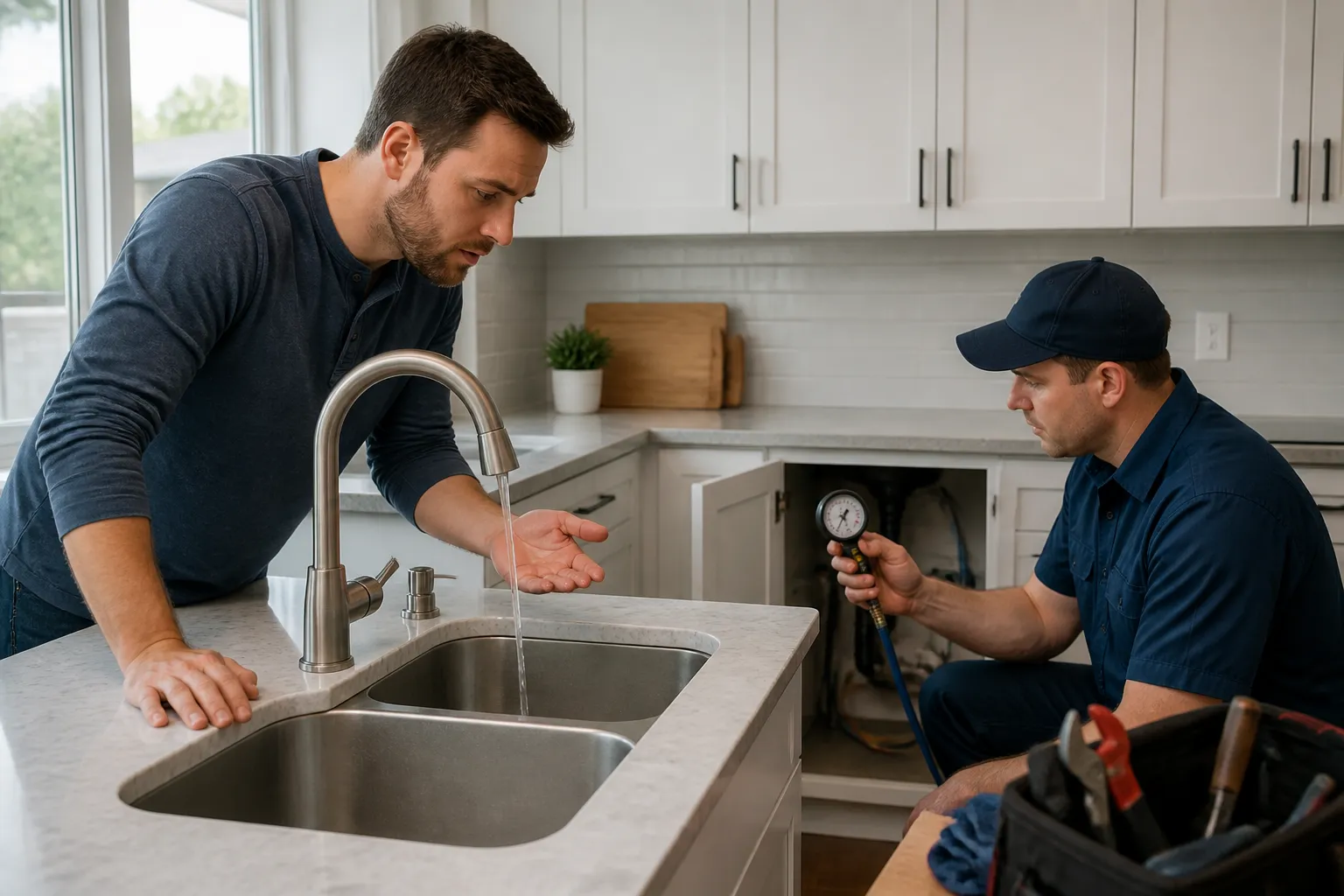
People often use “low pressure” to describe any weak stream. Pressure is the force pushing water through the pipe. Flow is the amount of water coming out of the faucet over time. A clogged aerator can reduce flow at one tap even when the home’s incoming pressure is normal. A pressure gauge attached to an outdoor hose faucet can help measure service pressure, but a reading does not identify the cause by itself.
Common causes of low water pressure
- A clogged faucet aerator or showerhead. Mineral scale or debris can block the small openings in an aerator or showerhead. If only one fixture is affected, inspect its screen. Clean or replace it only if you can do so without damaging the fixture, and check whether flow improves afterward.
- A partly closed fixture or main shutoff valve. A valve may have been closed during a repair and not fully reopened. Check the accessible shutoff under the affected sink and the home’s main valve. Do not force a stuck or corroded handle. A damaged valve can begin leaking when moved.
- A filter or water-treatment system that needs attention. A whole-house filter, softener, or other treatment unit can restrict flow if its cartridge is clogged, its bypass is partly set, or the unit is not working correctly. Check the manufacturer’s maintenance instructions. If the pressure changed after a filter change or equipment service, note that timing for the plumber.
- A pressure-reducing valve problem. Some homes have a pressure-reducing valve, or PRV, that controls incoming pressure. A worn, stuck, or incorrectly adjusted valve can cause pressure that is consistently too low, too high, or unstable. Because pressure affects fixtures and connected appliances, avoid turning adjustment screws without knowing the home’s measured pressure and valve setup.
- A leak in a water line. A sudden pressure drop can happen when water escapes from a supply pipe. Look for damp spots under sinks, a wet wall or ceiling, water near the foundation, or a meter that continues moving when no water is being used. Hidden leaks can be difficult to locate and may cause damage even when there is no obvious puddle.
- Corrosion or buildup inside older pipes. Older galvanized steel pipes can corrode internally and gradually narrow the passage for water. Flow may worsen over time or vary between fixtures. Replacing an aerator will not correct a restriction inside a pipe, so a plumber may need to evaluate the material, age, and condition of the water lines.
- A water-service disruption or shared supply issue. If every cold-water fixture changes suddenly, ask a neighbor whether they have the same problem and check for a utility notice or nearby water-main work. A temporary system issue can affect more than one home. If neighbors have normal flow, the cause is more likely within your home’s plumbing or service connection.
What if only the hot water is affected?
Compare hot and cold water at the same faucet. If cold water flows normally but hot water is weak at several fixtures, the restriction may be on the hot-water side. A water-heater valve, connection, sediment or scale, or hot-water pipe may be involved. If the problem affects just one faucet, its cartridge or aerator may be the cause. Do not open a water heater or adjust its safety controls to troubleshoot a pressure problem.
Safe checks you can make
- Compare several faucets, including an outdoor hose faucet, and test both hot and cold water.
- Check whether the problem began after a plumbing repair, filter change, or utility interruption.
- Look for visible leaks and listen for water running when all fixtures are off.
- Clean a removable faucet screen if you are comfortable doing so and can reinstall it correctly.
- If using a pressure gauge, follow its instructions and avoid changing a PRV based on a single reading.
EPA WaterSense notes that many household fixtures operate best when incoming pressure is in a typical range of 45 to 60 psi. Actual conditions vary by home and water system, so a professional can measure pressure and check the valves, filters, pipes, and service line together.
When to call a plumber
Arrange an inspection if low flow affects multiple fixtures, begins suddenly, keeps returning, or occurs alongside a leak, water stain, unusual noise, or unexplained meter movement. A sudden loss of water across the home may also be a utility issue, so check with your water provider if nearby homes are affected. A clear diagnosis helps distinguish a fixture problem from a whole-home or supply-side issue.
Paladin Plumbing provides residential plumbing service in Inman and across Upstate South Carolina. If you are dealing with weak flow, a pressure change, or a suspected leak, call 864-261-1292 to describe what you are seeing and discuss next steps. For more background, read EPA WaterSense’s home maintenance guidance on leaks and service pressure.