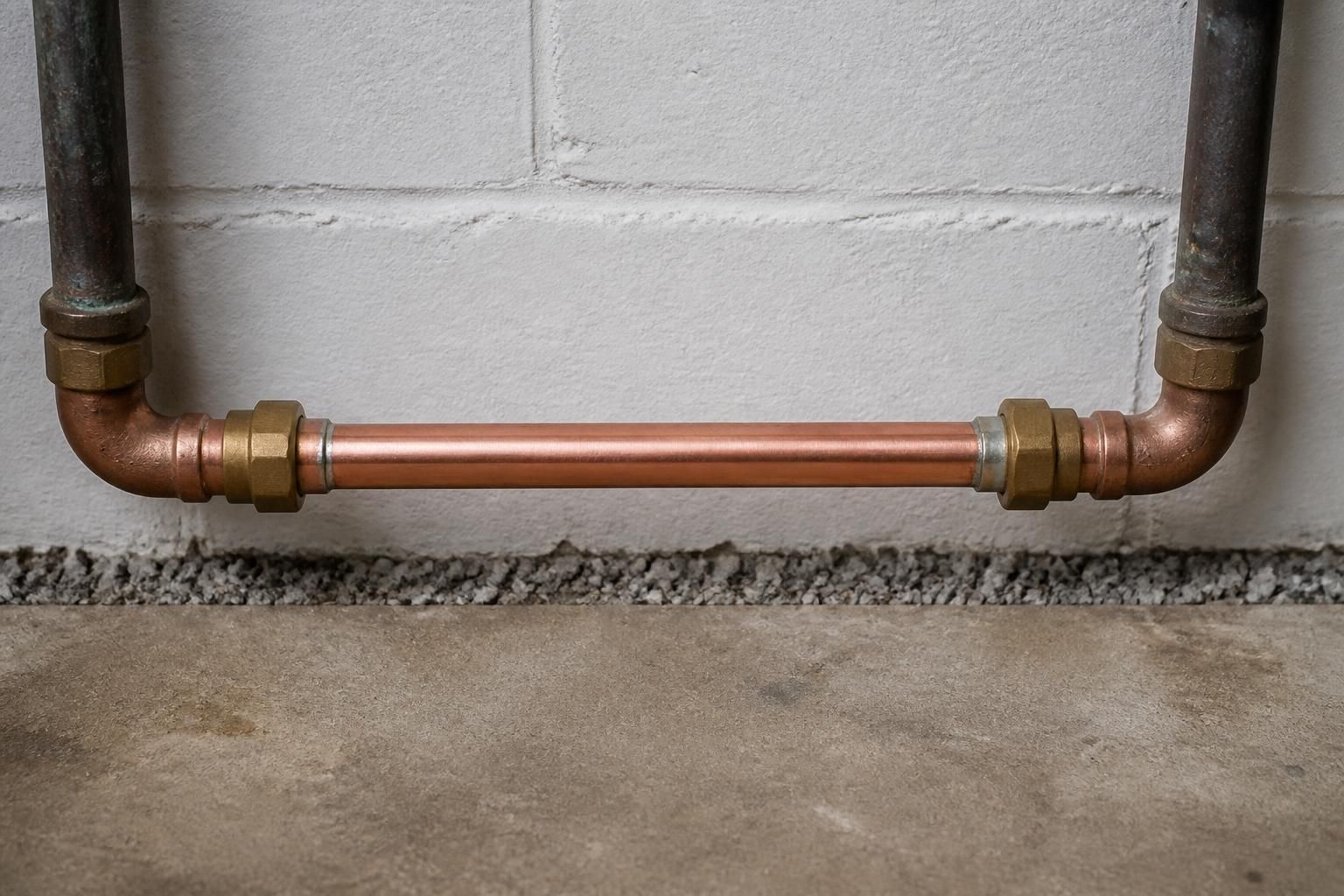
A small drip behind a wall can turn into stained drywall, warped flooring, or a sudden loss of water at the fixture. If you have noticed wet spots, weak pressure, noisy pipes, or a pipe that has already split open, the next step is to have it checked before the damage spreads further.
Paladin Plumbing handles pipe repair for homes and businesses across Inman, South Carolina. We track down the source of the problem, explain what is happening, and make a repair that fits the condition of the pipe, the location, and the rest of the plumbing system.
Pipe trouble signs
Pipe damage does not always start with a visible leak. Many customers first notice a change in water pressure, a faint sound inside the wall, or damp material near a cabinet, ceiling, or foundation area. Those clues matter because a small crack can keep getting worse until it becomes a much larger repair.
If you are unsure whether a pipe needs attention, watch for these common signs:
- Water stains on walls, ceilings, or floors
- A musty smell near cabinets or enclosed spaces
- Sudden drops in pressure at one fixture or throughout the property
- Rattling, banging, or hissing sounds from piping
- Damp soil, soft flooring, or standing water near the building
- Visible rust, corrosion, or mineral buildup on exposed pipe
These symptoms do not always point to the same cause. A leak may come from a joint, a worn section of pipe, a split line, or damage near a connection point. The sooner the problem is found, the less likely it is to spread into surrounding materials.
Common pipe problems
Pipes can fail for several reasons, and each one calls for a different repair approach. Some issues show up slowly through repeated drips or discoloration. Others happen quickly after a fitting loosens, a section cracks, or a line gives way under pressure.
Leaks at joints
Joints are common failure points because they connect separate sections of pipe. A loose fitting, worn seal, or stressed connection can let water escape little by little until the leak becomes noticeable.
Cracks and splits
A crack can start small and open wider with pressure changes or repeated use. Split pipes often need a section replaced rather than patched, especially when the damaged area is larger than it first appears.
Corrosion and wear
Older pipe materials and constantly exposed sections may weaken over time. Corrosion can thin the pipe wall, roughen the surface, and create pinhole leaks that are easy to miss at first.
Frozen or impact damage
In some cases, a pipe fails after physical stress. A bumped line, shifted support, or freezing conditions can leave the pipe compromised even if the break is not visible right away.
How we repair
Every pipe repair starts with a careful look at the symptoms and the location of the line. Some repairs are straightforward, while others require more tracing to find the actual source. Paladin Plumbing focuses on clear diagnosis so the repair matches the problem instead of covering it up.
- Inspect the problem area. We look at the visible signs, nearby fixtures, and any affected materials to narrow down where the leak or break begins.
- Find the failure point. A leak often travels before it shows itself. We trace the path so the repair addresses the right section of pipe.
- Select the repair method. Depending on the damage, we may repair a fitting, replace a damaged section, or correct a connection issue.
- Test the line. After the repair, we check the area again to confirm the problem has been addressed and the line is holding as expected.
- Review next steps. If nearby pipe sections show wear, we explain what to watch so you can make a practical plan for the future.
The goal is not just to stop the leak for the moment. It is to leave the pipe in a condition that makes sense for the rest of the system and the way the property is used.
Repair options
Pipe repair is not one-size-fits-all. A minor leak at a connection may call for a focused fix, while a damaged section of line may need replacement. We look at the age of the pipe, the type of material, the size of the damage, and whether the line is easy to access before recommending a solution.
For many property owners, the most useful answer is the one that solves the immediate problem without creating a larger one later. That can mean:
- Fixing a leaking joint or fitting
- Replacing a cracked section of pipe
- Repairing visible damage on an exposed line
- Addressing a weakened area before it fails again
When a pipe has repeated problems, we look beyond the spot that failed. Nearby corrosion, movement, or strain can point to a larger pattern that needs attention.
Signs inside the house
Not every pipe issue starts outside or below the home. Many leaks first show up where water is used every day. A dripping line under a sink, a wet cabinet base, or an unexplained change in water flow can all signal trouble hidden behind the walls or under the floor.
Homeowners often notice the problem through these symptoms first:
- Cabinet bottoms that stay damp
- Paint bubbling or peeling near plumbing walls
- Warped trim or soft drywall
- Water sounds when fixtures are off
- Unexpected puddles near exposed piping
These signs are worth checking quickly because interior damage can spread long before the pipe problem becomes obvious.
Commercial pipe repair
Businesses, offices, and industrial properties need pipe repair that keeps operations moving without unnecessary delays. A leaking supply line, damaged branch line, or failing connection can affect restrooms, sinks, break areas, or utility spaces. For commercial properties, even a small issue can disrupt schedules and create avoidable cleanup work.
Paladin Plumbing handles pipe repair for commercial settings across Inman, South Carolina and nearby communities. We work with the same focus on diagnosis and repair quality, while keeping the needs of the property and its daily use in mind. That may include repairs tied to fixture supply, line sections serving multiple areas, or exposed pipe that has started to show wear.
What to expect
When you call Paladin Plumbing, the conversation starts with the symptoms you have noticed and where the problem seems to be showing up. The more detail you can share, the faster we can narrow down what is likely happening. From there, we schedule the work, inspect the area, and explain the repair path clearly.
You do not need to know whether the issue is a crack, a loose fitting, or a failed section. You only need to tell us what changed, when you noticed it, and where water or damage seems to be appearing. We take it from there.
Helpful details to share
- Where the leak or stain first appeared
- Whether water pressure changed
- Any sounds coming from the pipe area
- Whether the problem is new or has been getting worse
- What type of fixture or room is affected
Common questions
How do I know a pipe leak is hidden?
Hidden leaks often show up through stains, damp materials, musty odors, or a change in water pressure. If the signs keep returning, the problem may be behind a wall, under a floor, or near an enclosed pipe run.
Can a small crack wait?
A small crack can turn into a larger break, especially if the line stays under regular use. Even a slow leak can damage nearby materials over time, so it is worth having it checked early.
Why does the same pipe keep leaking?
Repeated leaks can mean the line has a weak section, a stressed joint, or corrosion near the original repair. In those cases, fixing only the visible spot may not solve the underlying issue.
What makes a pipe repair different from replacement?
Repair focuses on the damaged area while keeping the rest of the line intact. Replacement is used when the pipe section is too worn, cracked, or damaged to trust for continued use.
Can pipe damage affect water pressure?
Yes. A leak or break can reduce pressure at fixtures, especially if water is escaping before it reaches the tap. Pressure changes can also show up when a line is partially blocked or damaged near a connection.
Do pipe issues always create visible water?
No. Some leaks stay hidden for a while and show up through stains, odors, or material damage before any standing water is seen. That is why unusual changes around the pipe area deserve attention.
Schedule pipe repair
If you are dealing with a leak, cracked line, or pipe damage that keeps coming back, Paladin Plumbing can help you move from guesswork to a clear repair plan. We serve Inman, South Carolina and nearby communities across Upstate South Carolina with pipe repair built around honest diagnosis and solid workmanship.
Call +18642611292 or email eric@leadzmanager.com to get started. We are open Monday through Friday, 8:00 AM to 5:00 PM.