A quick look at your home’s plumbing can help you notice changes before a small drip becomes a larger cleanup. Homeowners do not need to take pipes apart or diagnose hidden problems. The goal of a simple inspection is to look for visible leaks, slow drains, damaged fixtures, and changes in how water is used.
Use this checklist a few times a year and after major plumbing work or a noticeable change in water use. It is a basic visual review, not a substitute for a plumber’s inspection. If you find a problem you cannot safely assess, take a photo from a safe location and arrange professional help.
1. Check under sinks and around faucets
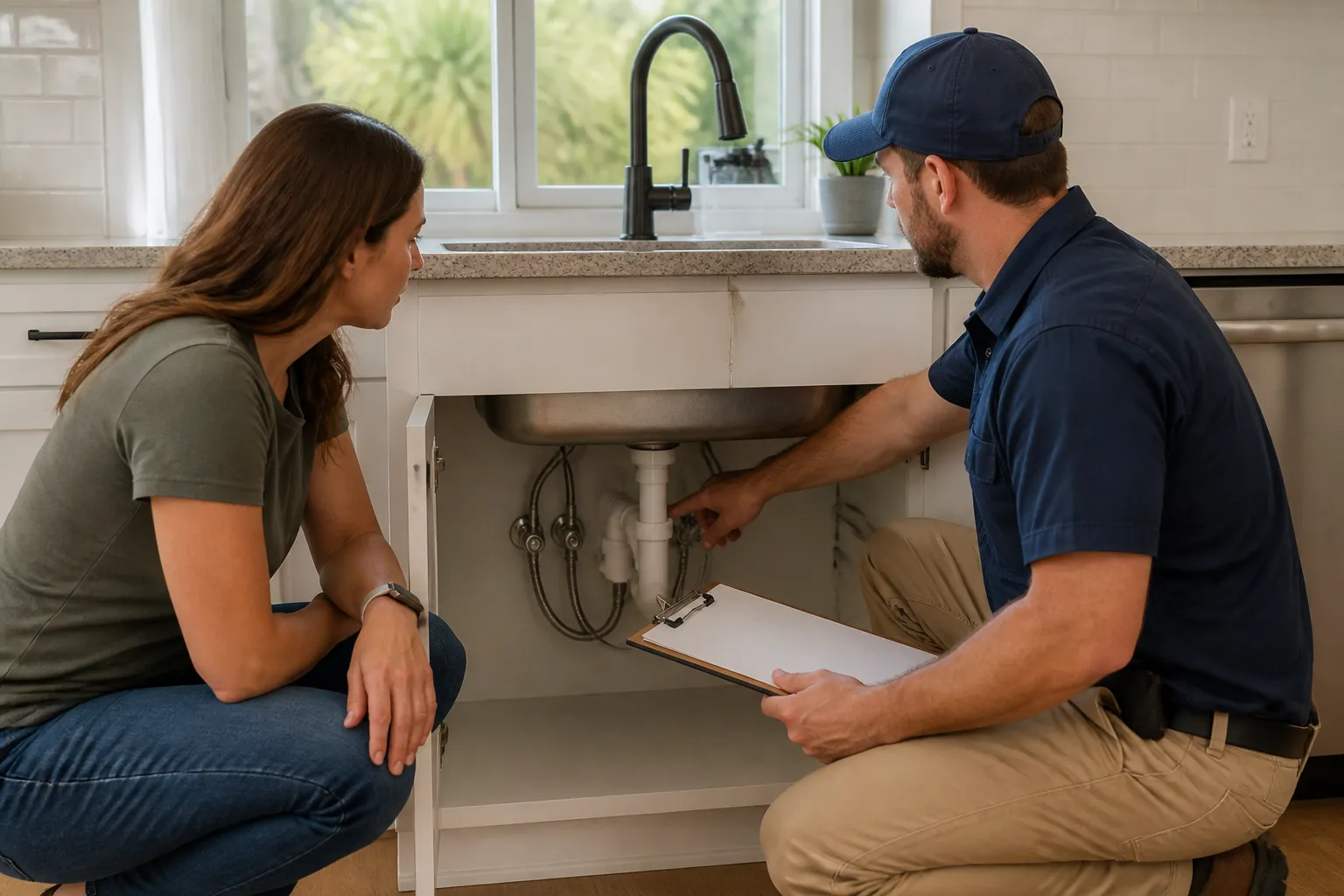
Look inside bathroom and kitchen cabinets for dampness, water stains, swollen cabinet bottoms, or a musty smell. Check the visible supply lines, shutoff valves, and drain connections without forcing or tightening anything. A slow drip may appear only after the faucet has run, so look again after ordinary use.
- Do you see drops, corrosion, or moisture at a connection?
- Does the cabinet floor feel damp or show a recurring stain?
- Does the faucet drip when it is turned off?
- Does the sink drain normally, or does water collect in the basin?
2. Look around toilets and bathroom fixtures
Check around the base of each toilet for moisture, staining, or movement. Listen for a toilet that keeps refilling when it has not been used. A running toilet can waste water, while moisture at the base may have more than one cause and should be assessed if it returns.
Run the sink, tub, and shower briefly and notice whether water drains at its usual pace. Persistent slow drainage, gurgling, or a recurring clog may call for service. Do not use a chemical drain product without carefully following its label, and never mix drain-cleaning products.
3. Inspect visible pipes and accessible areas
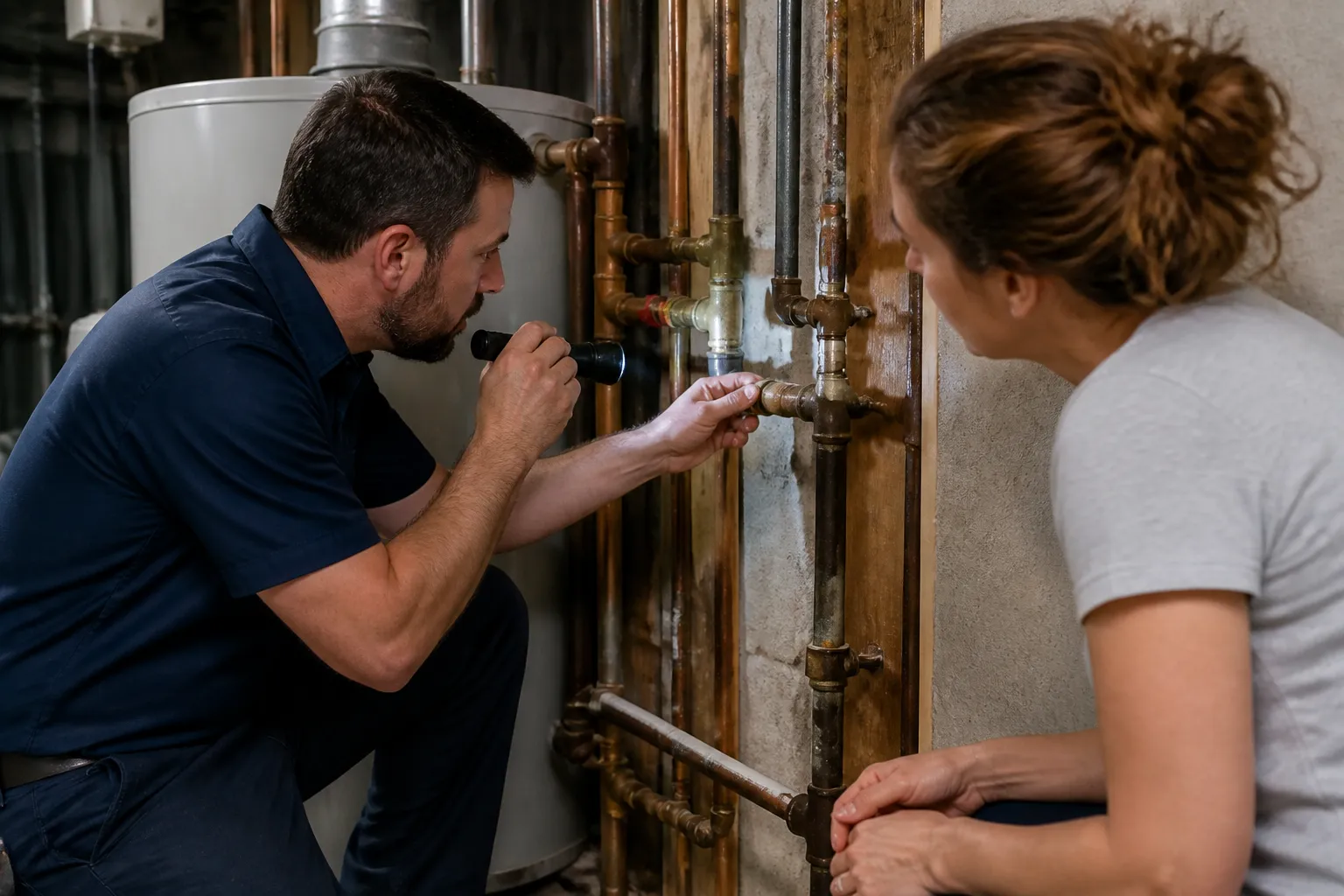
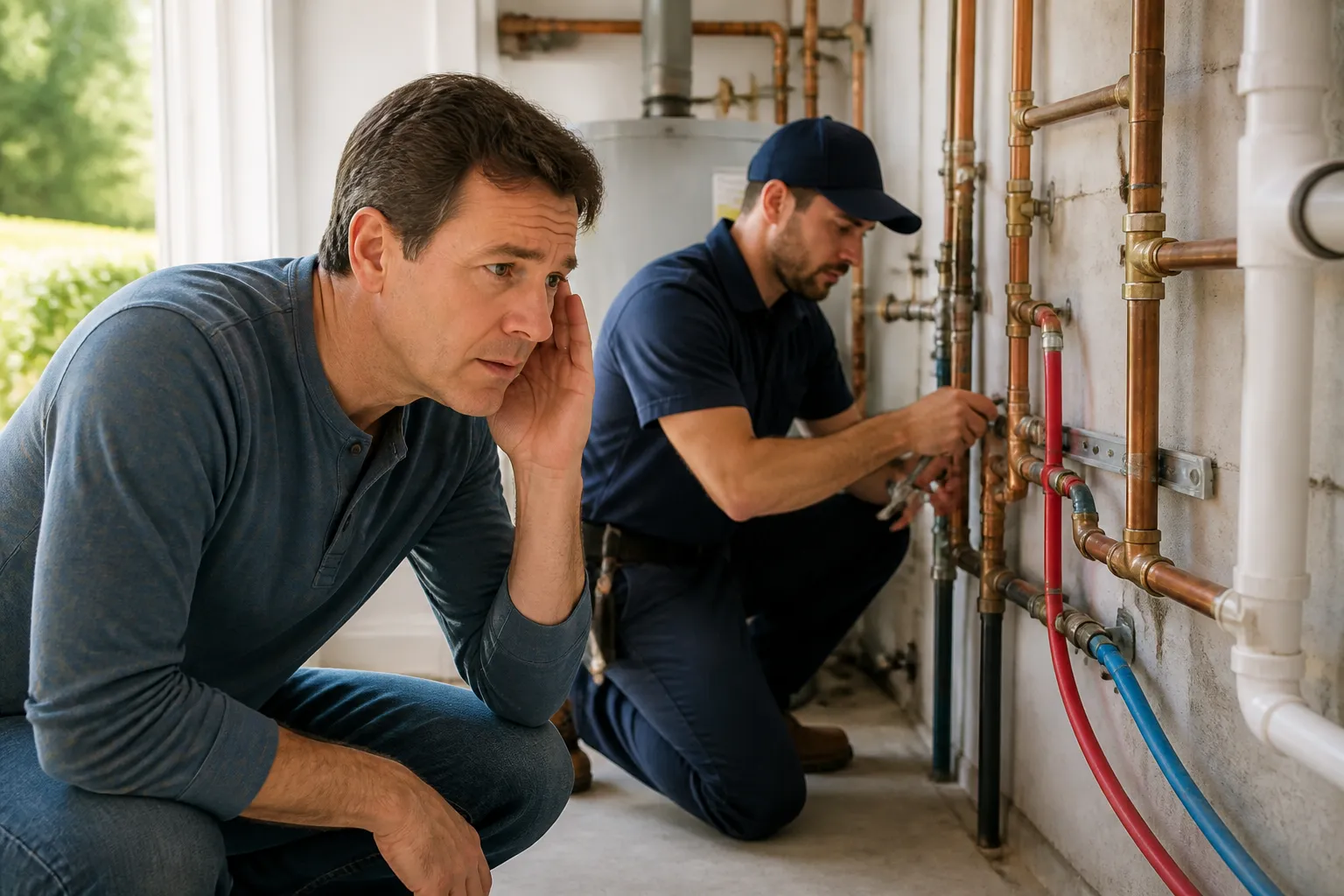
In a basement, crawl space, utility room, or unfinished area, look at plumbing that is already visible. Watch for active drips, corrosion, unusual deposits, damp insulation, or water marks. Do not crawl into a space that is unsafe, disturb insulation, or remove wall or ceiling materials to search for a pipe.
If the home has a crawl space, only look from an accessible, safe area. Standing water, unstable ground, electrical hazards, or suspected structural damage are reasons to stay out and ask an appropriate professional to assess the space.
4. Review your water heater area
Look around the outside of the water heater for moisture, rust-colored residue, or a change in how much hot water is available. Note any new sounds, alerts, or visible leakage. The water may come from a connection, valve, or the tank itself, so do not assume the source before it is checked.
Do not remove covers or adjust gas, electrical, or internal components as part of a visual check. Follow the owner’s manual for routine observations and call a plumber if the unit is leaking or operating differently.
5. Test fixtures and note changes in flow
Turn on a few faucets and notice whether flow seems different from usual. Check whether a change affects one fixture or several rooms, and whether it occurs with hot water, cold water, or both. A single faucet issue may be local to its fixture, while a broader change deserves a more complete assessment.
Also note unusual pipe sounds, water discoloration, or a change in how quickly hot water reaches a fixture. These symptoms can have several causes. Record where and when they occur rather than guessing which part has failed.
6. Check laundry, dishwasher, and appliance connections
Look for visible moisture near the washing machine, dishwasher, refrigerator water connection, and other water-using appliances. Keep hoses and connections accessible where possible, and note any puddle or staining that returns after an appliance runs. Do not pull a heavy appliance out by its hoses.
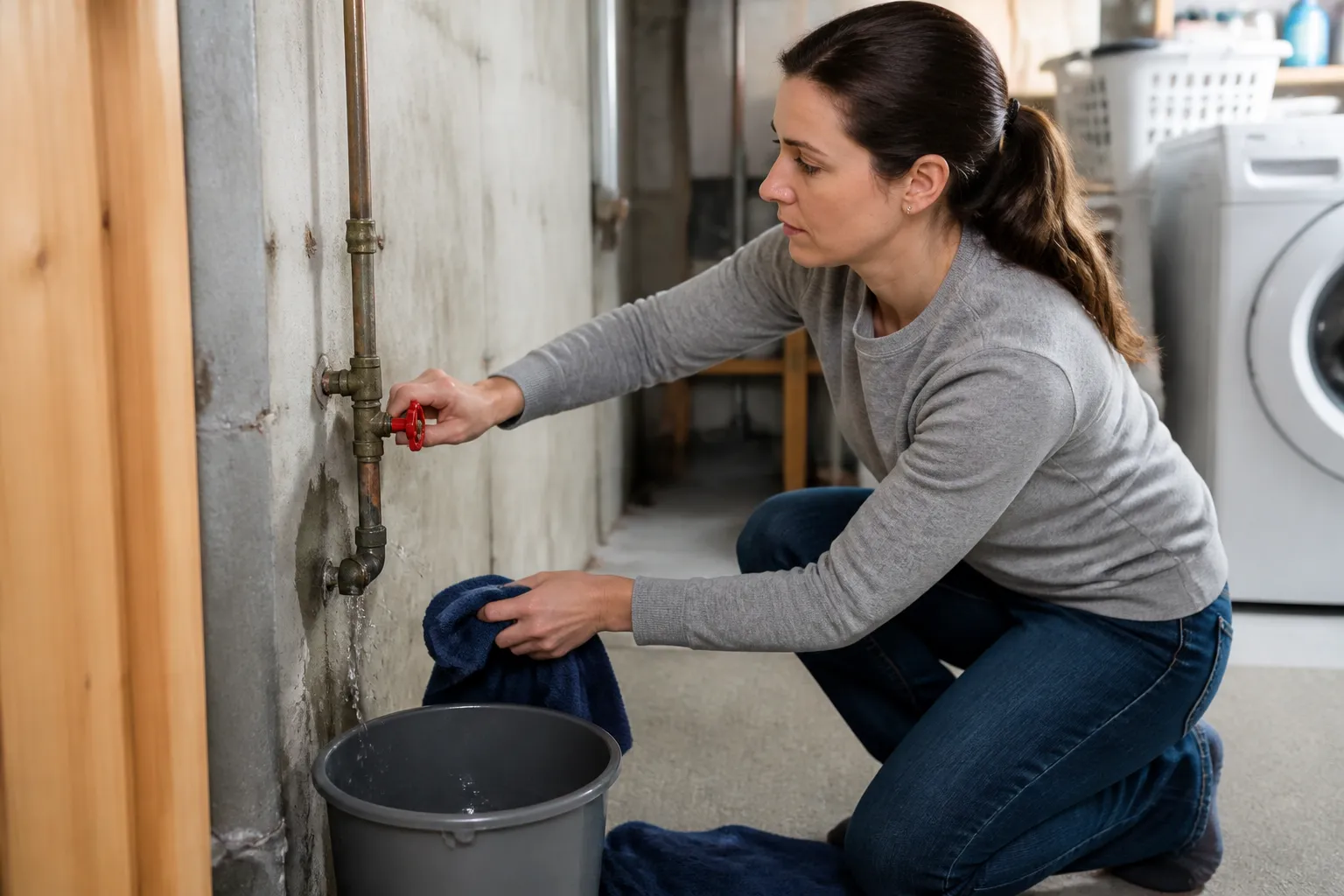
If you see a leak, stop using the appliance if it is safe to do so and use the appropriate shutoff only if you can reach it without moving equipment into a hazard. Share which appliance was running and what you observed when you arrange service.
7. Walk the outside of the home
Look at exterior hose connections, visible outdoor faucets, and areas where water lines enter the building. Persistent wet soil or pooling that is not explained by rain or normal irrigation may deserve attention. Note whether the area changes after water use, but do not dig around suspected buried piping.
Before a forecast cold snap, check that exposed plumbing in unheated areas is not obviously damaged and review the care instructions for your home. If a pipe freezes or appears damaged, do not use an open flame or an improvised heat source. If you are unsure how to protect a particular line, ask a plumbing professional.
8. Watch for signs of hidden leaks
A hidden leak may show up as a new stain, bubbling paint, damp flooring, a musty odor, or an unexplained change in water use. These signs can also come from roof, condensation, drainage, or appliance issues. Note the location and whether the condition changes after plumbing fixtures are used.
If the water meter is accessible and you know how to read it, you may compare readings during a period when no water is being used. Follow the water provider’s guidance and do not open or alter utility equipment. A meter observation can be one clue, not a diagnosis.
9. Know where the main water shutoff is
Find the home’s main water shutoff before a leak happens. Learn how it operates and keep the path clear. Do not force a valve that is stuck, corroded, or damaged. If you cannot locate the shutoff or are unsure which valve serves the property, ask a plumber to identify it during a service visit.
10. Keep a simple plumbing record
Write down repairs, fixture replacements, water heater service, and recurring symptoms. Photos of a visible issue and the date it appeared can help a plumber compare changes over time. Keep product manuals and model information for appliances and treatment systems together if practical.
When a homeowner checklist is not enough
Call a plumber if a leak returns, several fixtures are affected, a drain repeatedly backs up, water pressure changes across the home, or a water heater develops a visible leak. If you smell gas or suspect an active gas leak, leave the building and call 911 and the gas provider from a safe location. Do not wait for a routine plumbing appointment in that situation.
Paladin Plumbing serves Inman and nearby Upstate South Carolina communities. Call (864) 261-1292 to describe what you found and discuss a plumbing assessment. A few clear observations can help the visit focus on the right concern.