A burst pipe can release water quickly, but a few calm steps can help limit damage while you arrange professional service. Start with safety, stop the water if you can do so without risk, and keep people away from wet electrical areas. Then document what you see and share the details with the plumber.
If a pipe has split, a fitting has failed, or water is pouring from a wall, ceiling, or cabinet, use this guide to organize your response before help arrives. These steps are for immediate damage control, not a substitute for a plumbing repair.
1. Put safety first
Keep children and pets away from the leak and any standing water. Water near outlets, appliances, wiring, or a breaker panel can create an electrical hazard. Do not walk through water to reach electrical equipment, and do not touch a wet appliance or switch. If the area may be unsafe, move away and contact the appropriate emergency or utility service for guidance.
Watch for sagging ceilings, bulging drywall, or water near light fixtures. Do not stand under a water-filled ceiling or poke a bulge. If there is a risk of structural damage, leave that area and tell the responding professionals what you observed.
2. Shut off the water if it is safe
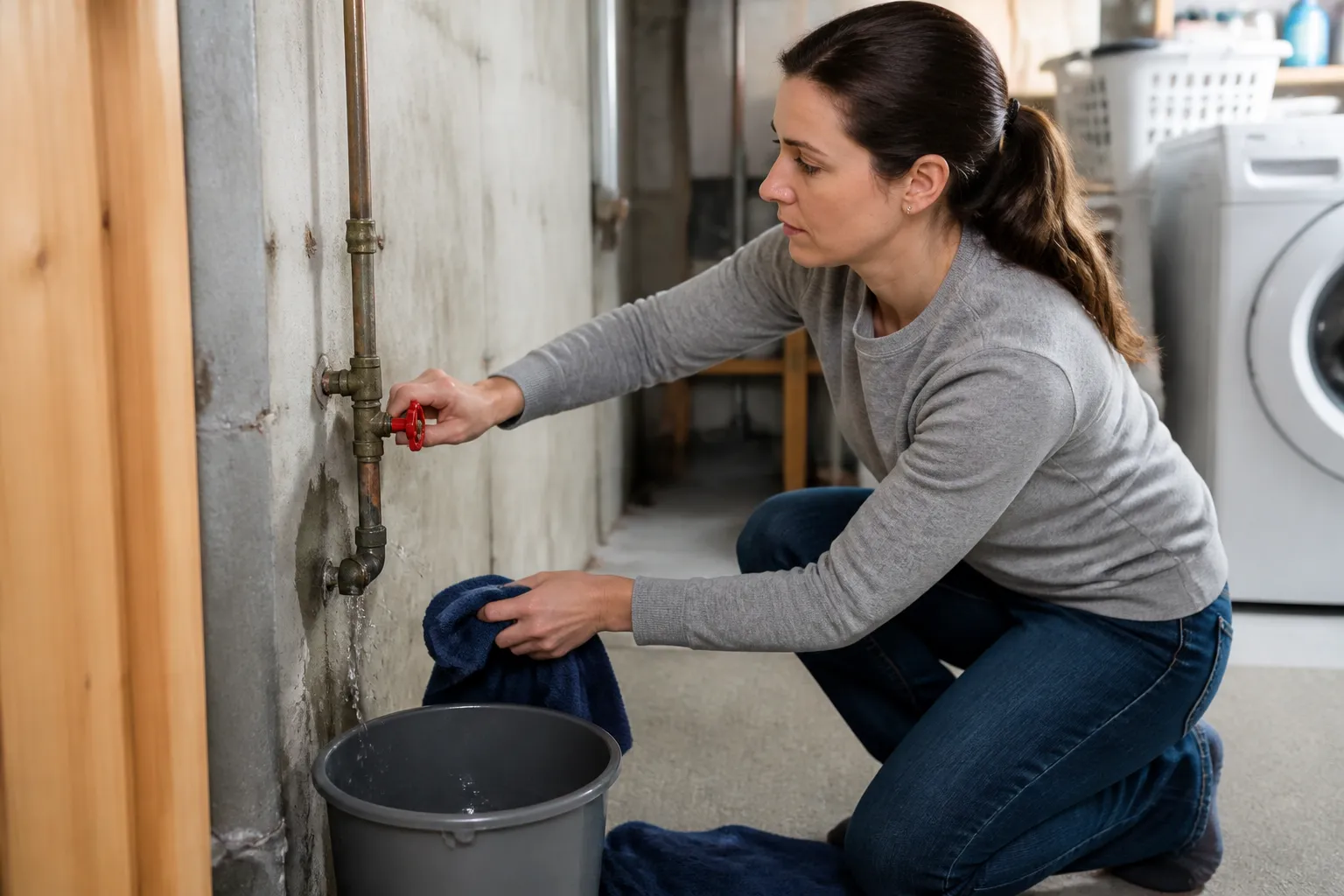
If you can reach the fixture or appliance shutoff without entering an unsafe area, turn it off. For a larger or unknown leak, use the home’s main water shutoff if you know where it is and can reach it safely. The valve is often near where the service line enters the home, but locations vary. Turn the handle or lever gently. If it is stuck or damaged, do not force it.
After the water is off, open a nearby cold-water faucet if it is safe and practical. This may relieve pressure in the plumbing, but it will not fix the broken pipe. If you cannot locate the main valve or the leak continues, tell the plumber when you call.
3. Call a plumber and describe the situation
Contact a plumbing professional as soon as you have addressed immediate safety and shutoff steps. Explain where the water is coming from, whether it is still flowing, which rooms are affected, and whether you were able to turn off the water. Mention if the leak is near a water heater, appliance, or electrical equipment.
Paladin Plumbing serves Inman and nearby Upstate South Carolina communities. Call (864) 261-1292 to describe the problem and discuss service. If there is a separate life-safety emergency, contact emergency responders first.
4. Limit water damage without taking unnecessary risks
If the water is away from electrical hazards and the area is safe to enter, move belongings out of the wet area. Use towels or a container to catch a small, controlled drip. You may place a bucket under a leak if it is safe and does not require climbing or reaching near damaged materials. Do not climb onto a wet surface or move heavy furniture across a flooded floor.
Do not open walls, ceilings, or floors to search for the pipe. The visible water may have traveled from another location, and cutting into a concealed area can damage wiring or other plumbing. A plumber can assess the source and explain what access may be needed.
5. Avoid temporary fixes that can make things worse
Do not use open flames, heat guns, or improvised heat sources on a pipe. Do not apply sealants, adhesives, or clamps unless a qualified professional has advised you that a particular temporary measure is appropriate for the situation. Avoid operating the plumbing system while water is leaking. If you have already tried a temporary fix, tell the plumber what you used and where.
If the leak is connected to a water heater or an appliance, avoid adjusting gas, electrical, or internal components. Keep the equipment off limits until the source and surrounding conditions have been assessed.
6. Take photos and keep useful details
From a safe, dry location, take photos or short video of the visible leak and affected rooms. Note when you first noticed the water, whether it grew worse, which fixtures were in use, and what shutoff you turned. This record can help the plumber understand the sequence of events. Keep receipts for emergency supplies or cleanup, and contact your insurer if you need to ask about documentation or next steps under your policy.
7. Treat sewage backups differently
If the water appears to contain sewage or wastewater, avoid contact and keep people and pets away. Do not use sinks, showers, toilets, or other fixtures that may discharge into an affected drain line until the cause is assessed. Tell the plumber that a sewer or drain backup may be involved. Cleanup of contaminated materials may call for a qualified restoration or sanitation provider.
What happens when the plumber arrives?
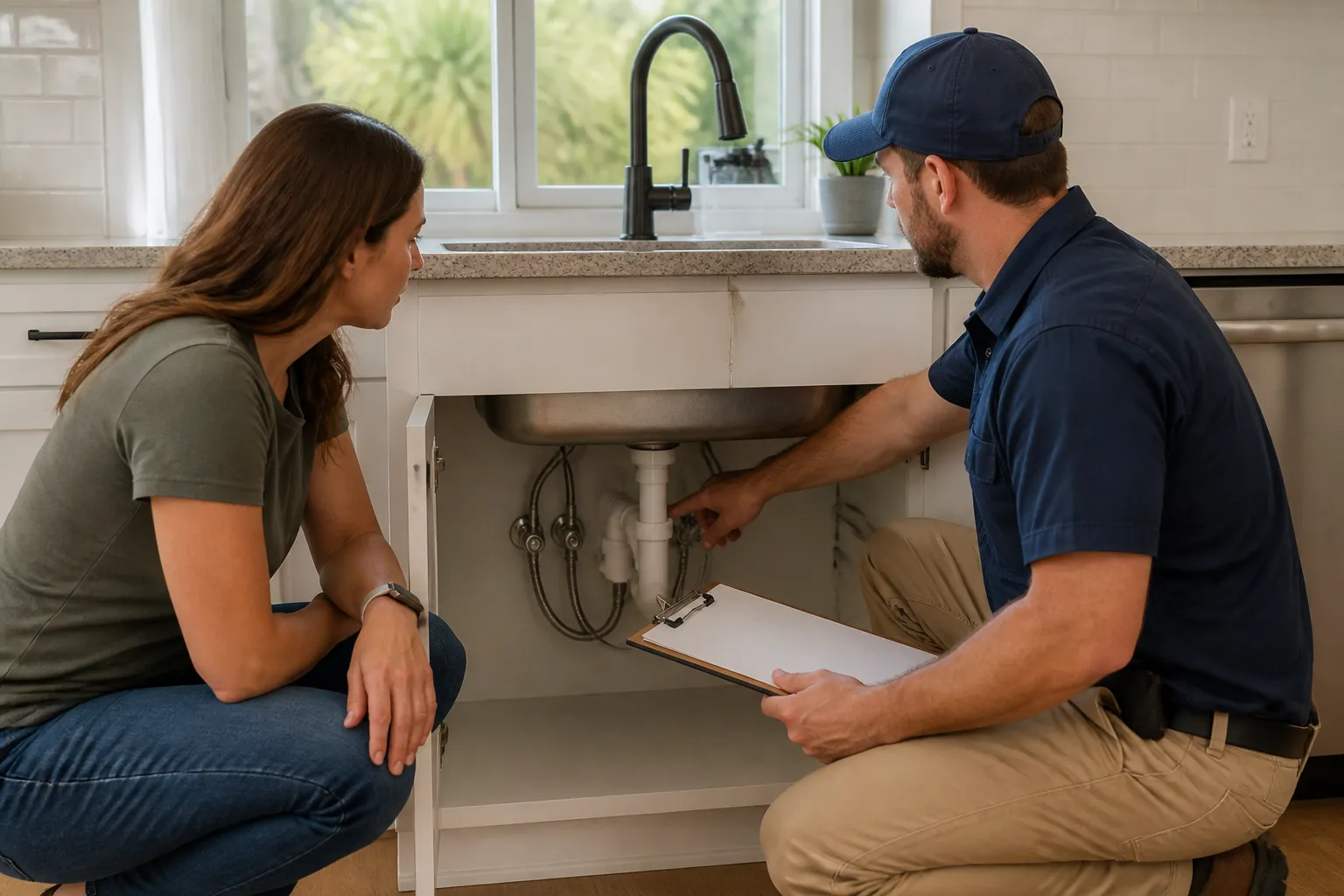
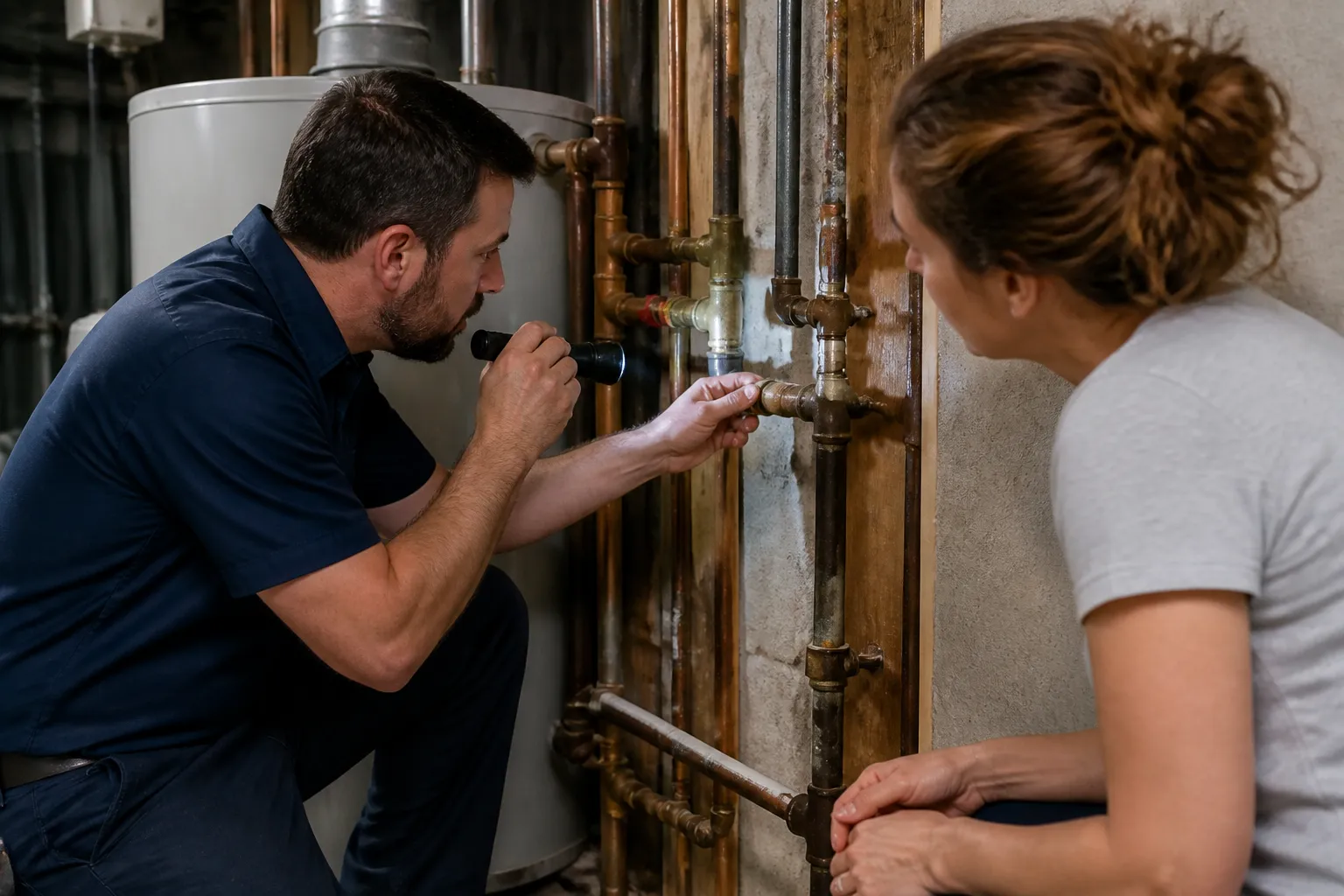
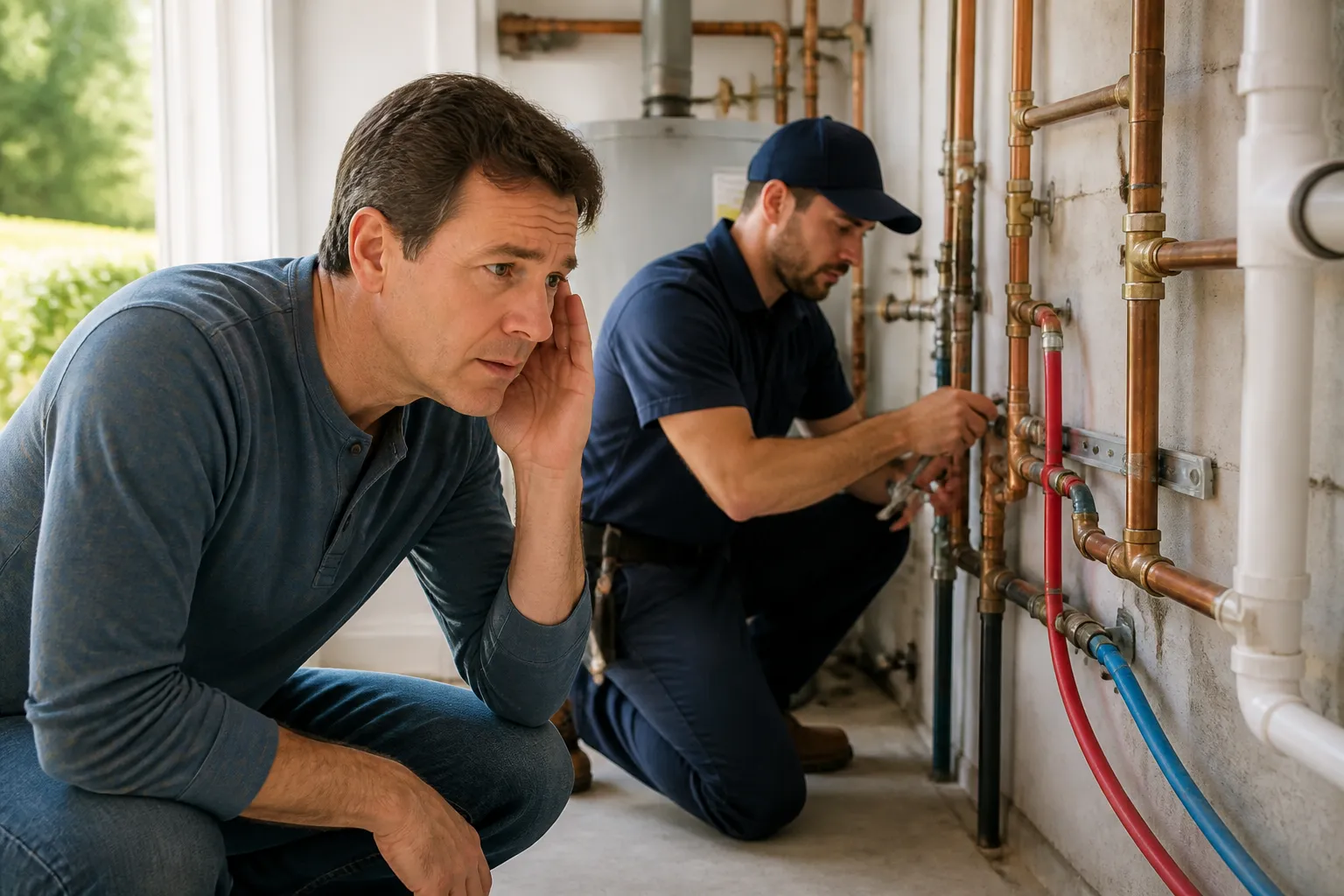
The plumber will review where water is appearing, check accessible plumbing, and work to identify the failed pipe, fitting, valve, or connection. The visible wet area is not always directly beside the source, so additional inspection or access may be needed. Once the cause is clearer, the plumber can explain the repair scope and estimate before approved work proceeds.
After the plumbing repair, damaged drywall, flooring, cabinets, or other finishes may need separate drying or restoration. Ask which work is included in the plumbing service and whether another specialist should evaluate affected materials.
Quick checklist before the plumber arrives
- Keep people and pets away from unsafe or wet electrical areas.
- Shut off the fixture or main water valve only if safe and accessible.
- Do not force stuck valves or open walls and ceilings.
- Move small belongings only when the area is safe to enter.
- Note where the water is coming from and whether it is still flowing.
- Call the plumber and share any temporary steps you have taken.
A burst pipe is stressful, but you do not need to diagnose it before calling for help. Focus on safety, stop the water when it is safe, and leave the repair to a qualified plumbing professional.