If scale returns on fixtures or a water softener seems to use salt without changing the water, the system may need service. The cause could involve settings, the brine tank, a control, a valve, a connection, or the incoming water conditions. Symptoms help guide an assessment, but they do not identify a failed part by themselves.
Paladin Plumbing provides water softener repair in Inman and nearby Upstate South Carolina communities. We review what you have noticed, assess accessible components and plumbing connections, and explain what the findings support before recommending work. Because systems and water conditions differ, repair decisions are based on the equipment and site rather than a one-size-fits-all adjustment.
Signs a Water Softener May Need Attention
A change in water feel or appearance can have more than one explanation, so it is useful to note when the change started and whether it affects the whole property. Tell the plumber about signs such as:
- Scale or spots returning on faucets, shower surfaces, or dishes.
- The system does not appear to regenerate as expected.
- Salt levels change unusually or salt remains unchanged for a long period.
- Water is visible around the tank, brine cabinet, or nearby connections.
- A control display, valve, or alert shows a condition you do not recognize.
- Water flow changes after the softener or bypass valve is used.
These observations are useful clues, not a diagnosis. Water test information and the softener’s model details can help determine whether the system, plumbing, or incoming water should be checked first.
Common Water Softener Repair Concerns
Household softeners use controls and treatment media to manage hardness minerals. A problem can develop in the system itself, or the symptom can come from an unrelated plumbing or water-quality change. We look at the system as a whole before selecting a repair.
Regeneration and brine issues
Salt-based softeners periodically regenerate resin with brine. A change in regeneration can relate to the control settings, brine preparation, a blocked or restricted line, or another model-specific condition. The exact cause needs to be assessed before settings or components are changed.
Control, valve, or connection concerns
A control head or valve manages the system’s cycle and water path. A leak, unusual flow, or failure to cycle may warrant inspection of accessible connections and operating indications. Different models use different components, so product information matters when planning repair.
How We Assess a Water Softener
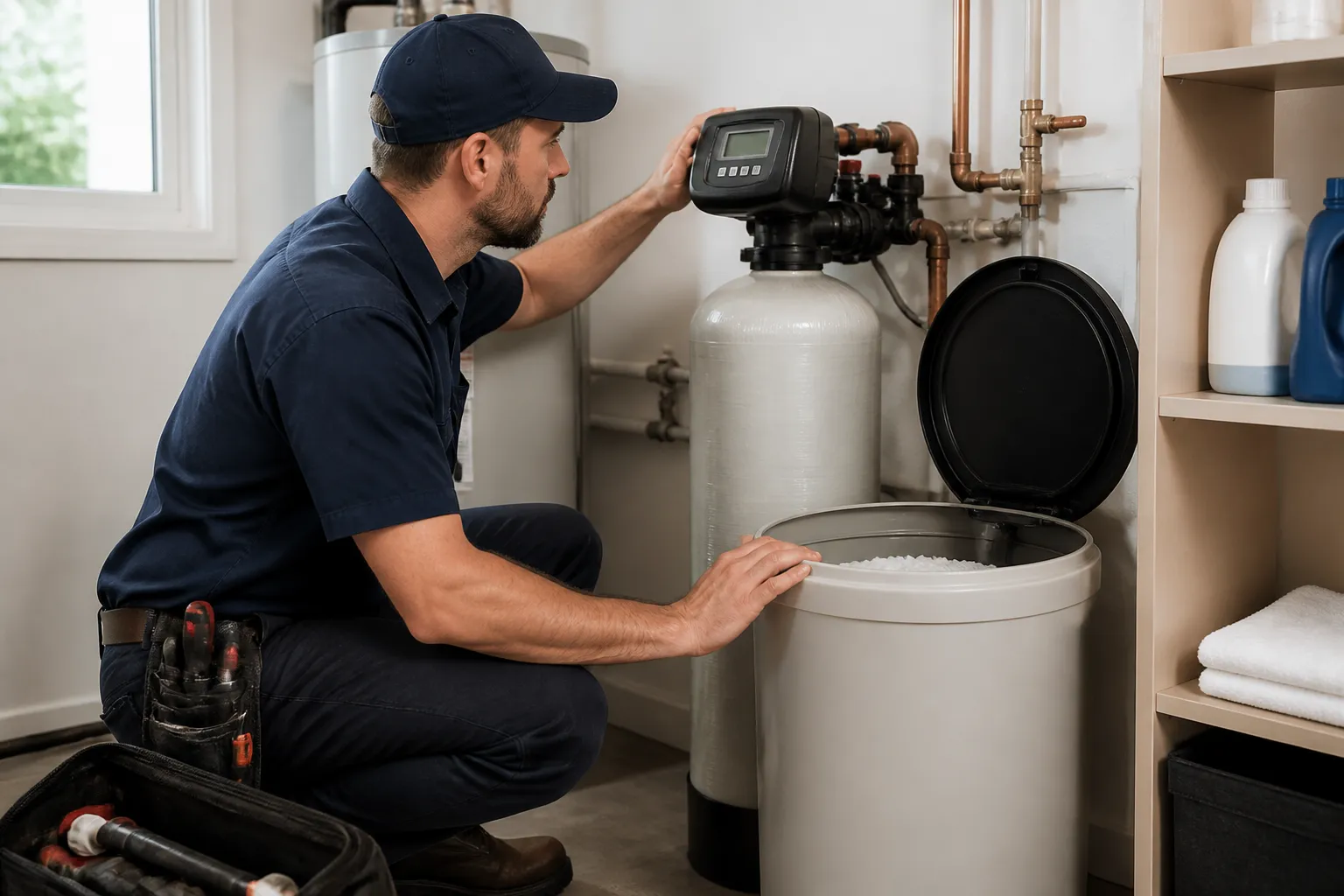
We begin with the symptoms, the system make and model if available, and any service history. The technician reviews accessible plumbing, the brine tank and controls where appropriate, and the water route through the unit. If a water test is available, it can help distinguish system performance from a change in incoming hardness.
We explain what can be observed and where access or missing information limits the assessment. If the issue appears to be outside the softener, such as a fixture or another plumbing component, we discuss that rather than assuming the treatment unit is responsible.
Repair or Replacement?
A repair may be suitable when the problem can be traced to a serviceable component or connection and the rest of the unit remains appropriate for the home. Replacement may be worth discussing if the system has extensive deterioration, recurring failures, or capacity that no longer fits the water conditions and household use.
Age alone does not determine whether a softener should be replaced. The model, condition, repair history, availability of compatible parts, and the property’s needs all matter. We outline what the assessment indicates and provide an estimate for the proposed work before proceeding.
What a Repair Visit Can Involve
The specific steps depend on the unit and the condition found. A repair assessment may include reviewing the control settings, checking accessible valves and tubing, looking for signs of leakage, and discussing how the system regenerates. If a repair is appropriate, the scope is explained before work begins.
- Review symptoms and history. We ask when the issue began, what has changed, and whether any maintenance was recently performed.
- Inspect accessible components. We consider the controls, brine setup, bypass arrangement, and nearby plumbing as appropriate to the model.
- Explain the likely cause. We describe what is confirmed, what remains uncertain, and whether testing or further evaluation would help.
- Complete agreed work and review operation. If repair proceeds, we explain what was addressed and discuss the system’s observed operation afterward.
If a needed part or additional testing is outside the initial scope, we explain what is required and discuss the next step before expanding the work.
After Repair: Water and System Care
After service, follow the manufacturer’s instructions for salt, regeneration, and routine checks. The correct settings depend on the system, incoming hardness, and household use. Avoid repeatedly changing controls or adding treatment products without understanding how they relate to the unit.
If the original symptoms continue, note when they happen and whether multiple fixtures are affected. A return of scale does not automatically mean the same part has failed again. The water supply, treatment settings, and other plumbing should be considered along with the softener.
Water Softener Repair in Inman and Nearby Communities
Paladin Plumbing serves homeowners in Inman and nearby Upstate South Carolina communities. We assess water softener concerns, explain repair options in practical terms, and consider the unit’s condition and the water information available.
When you call (864) 261-1292, share the system model, any displayed message, the last service date if known, and the changes you have noticed. If you have a water test, keep it available for the assessment.
Water Softener Repair FAQs
Why is hard water showing up even though I have a softener?
The system may not be regenerating as intended, the settings or capacity may not fit the water conditions, or another plumbing factor may be involved. A system review and water information can help narrow down the cause.
Why is the softener not using salt?
Salt use depends on the model, settings, and water demand. If the level is unchanged or the system does not appear to regenerate, the brine setup and controls may need assessment.
Can a water softener leak?
Water may come from a connection, valve, brine cabinet, or another nearby plumbing component. The source should be identified before deciding which part needs repair.
Can I change the regeneration settings myself?
Follow the model’s instructions and avoid changing settings if you are unsure how they affect system operation. A plumber can review the settings alongside the incoming hardness and household use.
Does a softener repair fix every water-quality concern?
No. A softener is generally designed to reduce hardness minerals. Other water concerns may call for testing and a different treatment system with product information that addresses the specific issue.
When should I consider replacing a water softener?
Replacement may be worth discussing if the unit has extensive wear, repeated failures, or no longer suits the water and household demand. The condition, repair options, and compatible parts help guide that decision.