Mineral buildup on fixtures, spots on dishes, and difficulty rinsing soap can be signs of hard water, but appearance alone does not measure water hardness. A water test and a review of household use can help determine whether a softener is appropriate and what system capacity may fit the property.
Paladin Plumbing installs water softeners in Inman and nearby Upstate South Carolina communities. We review the available water information, installation location, plumbing connections, and equipment requirements before discussing a system and estimate. A softener addresses hardness minerals, not every water-quality concern, so equipment should be selected for the specific goal.
Confirm Whether a Softener Fits the Water
Hard water contains minerals, primarily calcium and magnesium. Those minerals can contribute to scale on plumbing fixtures and appliances and may affect how soap lathers or rinses. A water softener may reduce hardness when testing indicates it is suitable, but it is not automatically needed in every home.
Before choosing equipment, consider:
- Whether a water test or provider information identifies hardness.
- How many people live in the home and how much water is used.
- Whether scale or soap residue appears on fixtures and dishes.
- Where a treatment unit could be installed and serviced.
- Whether the household has another water-quality concern that needs a separate system.
These details help guide a conversation, but do not replace testing or product specifications. If your concern involves a specific substance or drinking-water safety, choose treatment based on appropriate water information and the selected system’s documented claims.
How a Household Water Softener Works
Many household softeners use ion exchange. Water passes through resin that captures hardness minerals and exchanges them for sodium or potassium ions, depending on the system. The resin is periodically regenerated with brine so it can continue treating water. The exact setup and controls vary by model.
Regeneration uses salt and water, and the system needs a suitable place for the brine tank and discharge connection. Capacity and regeneration settings should be considered in relation to the incoming hardness and household use. Manufacturer guidance and the actual water conditions inform setup and ongoing operation.
What We Review Before Installation
We look at the water information available, the home’s usage, and the proposed equipment. This helps identify a practical unit size and whether the installation location can accommodate the system’s connections and service needs.
Hardness and household demand
Hardness level and daily water use affect the amount of treatment capacity a household may need. If a water test is available, share it. If hardness has not been checked, testing can help avoid selecting a system based only on scale or spots that may have another cause.
Equipment and product instructions
Softener models differ in capacity, controls, regeneration approach, and installation requirements. We review the available equipment information and explain which plumbing connections and space considerations apply. A softener should not be represented as a filter for every contaminant.
Planning the Installation Location
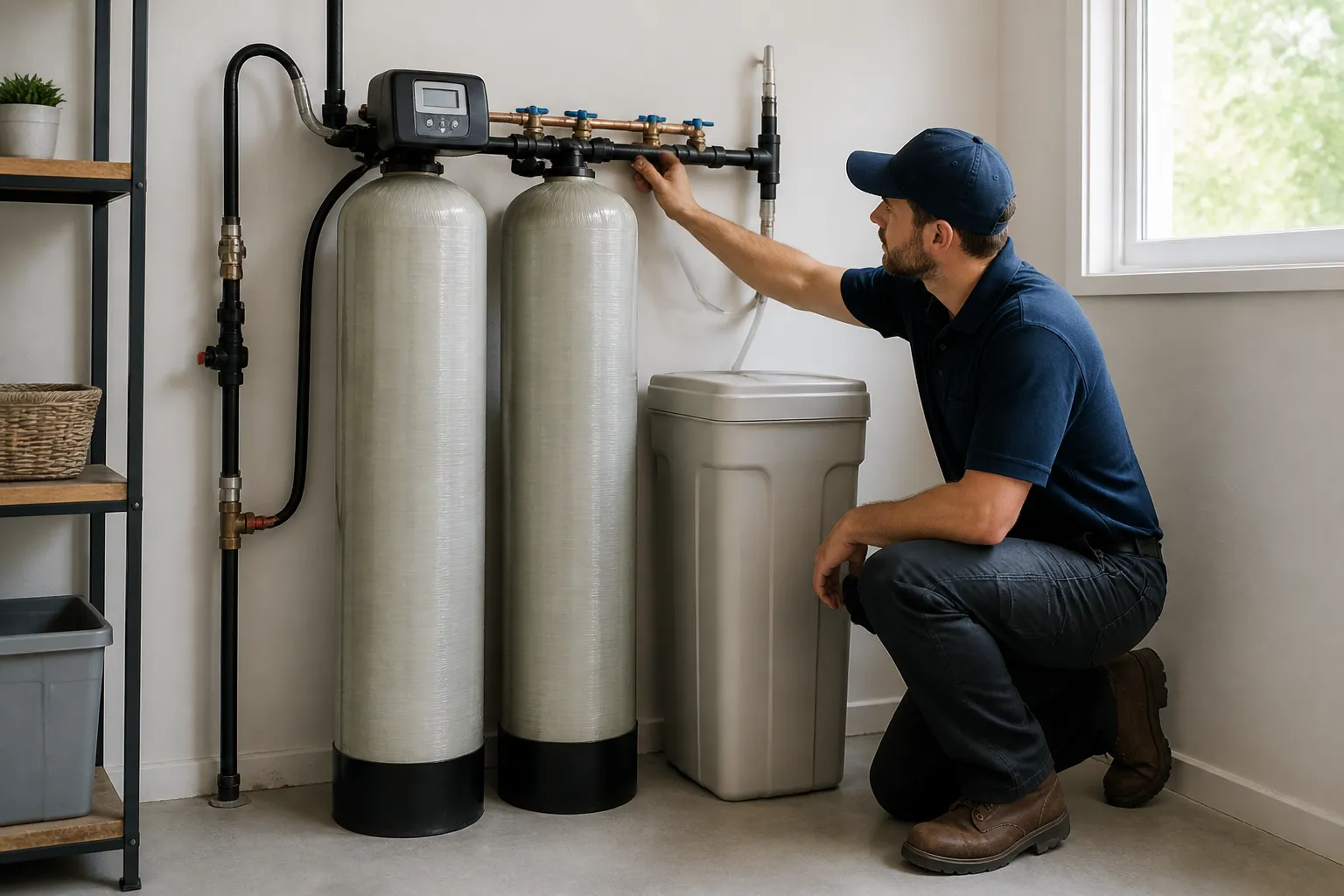
The system needs space for the treatment tank and, for many salt-based units, a brine tank. The location should allow access to the plumbing connections and controls for future service. A nearby drain connection and the required power supply may also be part of the installation, depending on the unit.
Placement near the home’s incoming water line can influence the plumbing route. The plan may include a bypass arrangement so the system can be isolated for service, depending on the unit and existing plumbing. We review available space, access, nearby equipment, and the manufacturer’s instructions before finalizing the work.
What Water Softener Installation Can Involve
The scope depends on the selected unit and the condition of the existing plumbing. An installation may include preparing the location, connecting the softener to the water supply, arranging a drain line for regeneration, and reviewing system operation.
- Review the water and equipment. We consider water hardness information, household use, and the selected model.
- Plan the connections. We assess the incoming water line, space, access, drain, and any power needs for the unit.
- Install the agreed system. The softener is connected according to the equipment instructions and site conditions.
- Review setup and care. We explain the controls, salt or other model-specific needs, and maintenance guidance for the system.
If the existing plumbing or proposed location requires work beyond the discussed scope, we explain the condition and review the next step before proceeding.
Care After Installation
After installation, the system may need salt replenishment, periodic checks, and regeneration settings suited to the water and household use. Follow the manufacturer’s instructions for the particular model. Do not change settings without understanding how they affect the system’s operation and water use.
Keep a record of the installation and any maintenance. If you notice a return of scale, unusual water flow, an alert, or a change in how the system regenerates, share what you observe with a plumber. Those signs can have different causes, so an assessment is more useful than guessing at a component or adjusting settings repeatedly.
Water Softener Installation in Inman and Nearby Communities
Paladin Plumbing serves homeowners in Inman and nearby Upstate South Carolina communities. We plan water softener installation around available water information, household use, the chosen equipment, and the plumbing conditions at the property.
When you call (864) 261-1292, share any water test results, the number of people in the home, and where you are considering placing the unit. This helps us discuss the installation requirements and arrange an assessment.
Water Softener Installation FAQs
Do I need a water test before installing a softener?
Testing can help confirm hardness and guide system selection. Scale or spots can have other causes, so water information is more useful than choosing a unit based on appearance alone.
Does a water softener remove every contaminant?
No. A softener is generally designed to reduce hardness minerals. It should not be assumed to address germs, chemicals, or other water concerns unless the specific product is documented for that purpose.
Where is a water softener usually installed?
It is commonly placed near the incoming water line where there is room for the treatment tank, any brine tank, plumbing connections, and access for service. The property layout and unit instructions determine a suitable location.
Does installation require a drain connection?
Many salt-based units discharge water during regeneration and need an appropriate drain arrangement. Requirements differ by equipment, so the selected model and site should be reviewed.
How is a softener sized for a home?
Capacity depends on the incoming hardness, household water use, and the product’s specifications. Water test information and typical use help guide the selection.
What maintenance does a water softener need?
Care varies by model, but may include checking salt, keeping the brine tank clean, and reviewing regeneration settings. Follow the manufacturer’s instructions and arrange service if the system stops operating as expected.