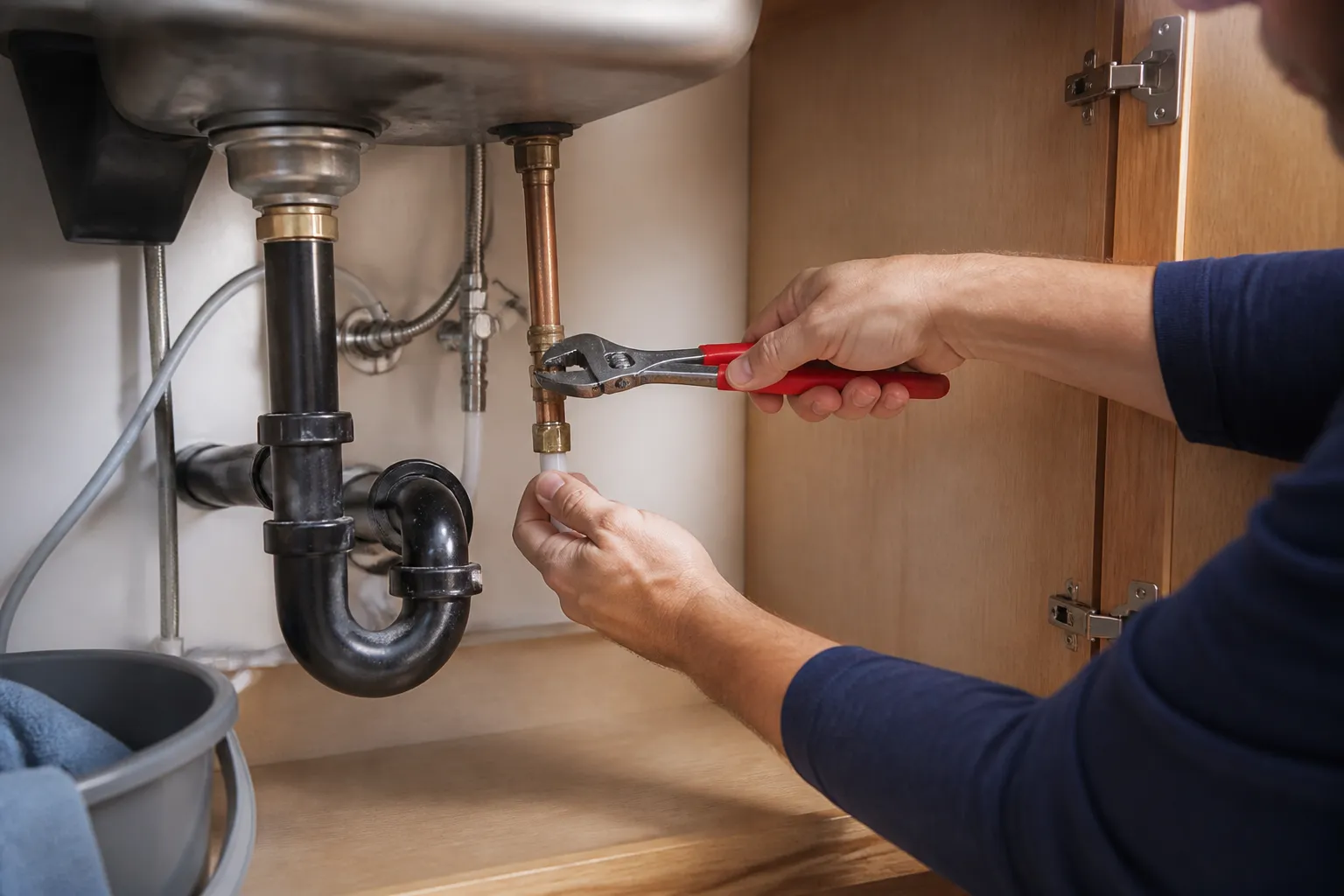
A water leak can start at a visible fitting under a sink or remain hidden behind a wall, beneath a floor, or near an appliance connection. Even a small amount of water can leave staining or dampness, while a concealed leak may show up far from its source. Identifying the affected plumbing helps determine what repair is appropriate.
Paladin Plumbing provides water leak repair in Inman and nearby Upstate South Carolina communities. We review where water is appearing, check accessible pipes and connections, and explain what the findings support before discussing repair work. If the source is not clear, leak detection may be needed before the repair scope is set.
Water Leak Repair for Home Plumbing
Leaks can come from supply pipes, shutoff valves, fixture connections, or other plumbing components. Water may drip into a cabinet, stain a ceiling, or travel along framing before becoming visible. The location of the wet spot does not always identify the point where water is escaping, so the plumbing should be assessed before choosing a repair.
Our first step is to understand the pattern and inspect the areas that can be reached. A loose or deteriorated connection may call for a focused repair, while a damaged pipe section may require a different approach. We explain which part of the system appears involved and what remains uncertain.
Signs Your Plumbing May Be Leaking
Water leaks do not always appear as a steady drip. Tell us if you have noticed:
- Dampness or water inside a cabinet beneath a sink.
- Water stains, bubbling paint, or soft drywall near plumbing.
- Moisture around a toilet, faucet, shower, or appliance connection.
- A recurring wet area or unexplained musty smell.
- Water sounds when fixtures are not being used.
- An unexplained change in household water use.
- A leak that returns after a prior repair or tightening of a connection.
These signs may also come from condensation, roof or surface water, a drain problem, or another source. The timing, nearby fixtures, and whether the moisture changes with water use can help focus the assessment.
Where Water Leaks Commonly Occur
Different parts of a home's plumbing can produce similar symptoms. We consider the location and the plumbing connected to it rather than assuming the visible water points directly to the source.
Fixture and shutoff connections
Supply lines, valves, faucets, toilets, and sink connections can develop leaks at joints or components. Water may collect inside a vanity or appear at the base of a fixture. We check accessible areas and distinguish a supply-side leak from water coming from the drain or fixture itself.
Accessible or concealed water pipes
A pipe may leak in a utility area, wall, ceiling, or below a floor. Water can travel before it reaches an opening or surface, so stains and damp patches may appear some distance from the damaged section. If the line is concealed, additional evaluation or access may be needed to confirm the source.
Appliance plumbing connections
Some appliances connect to household water lines through a supply hose or valve. Moisture near an appliance may come from the connection, the appliance, or nearby plumbing. Share which appliance is involved and when the leak occurs so the appropriate area can be assessed.
How We Approach Water Leak Repair
The work depends on the leak location, the pipe or fitting condition, and how the area can be reached. A typical service visit may include:
- Review the symptoms. We ask when the leak began, where water appears, and whether it changes with fixture or appliance use.
- Inspect accessible plumbing. We check nearby pipes, valves, and connections that may relate to the reported signs.
- Explain the repair scope. We describe what appears to be leaking and whether further detection or access is needed before repair.
- Complete agreed work and review it. If repair proceeds, we explain what was addressed and check the affected plumbing as conditions allow.
If the source cannot be confirmed during the initial inspection, we explain what additional evaluation may help. If water damage has affected flooring, cabinets, or wall finishes, restoration may require a separate provider from the plumbing repair.
Repairing a Fitting or Replacing a Pipe Section
A leak does not automatically mean the entire line needs replacement. When the source is a specific connection or an identifiable section of pipe, a focused repair may be considered. The condition of nearby plumbing, the material, and the access available help determine whether that approach is suitable.
If the pipe shows broader deterioration or a leak has returned after previous work, we can discuss whether a longer section should be evaluated. The recommendation should reflect what can be observed and confirmed. We explain the proposed work and any known limits before expanding the scope.
What to Do Before the Repair Visit
Note where water appears, when you first noticed it, and whether it changes after using a particular fixture or appliance. Clear access to the affected cabinet, visible pipe, or utility area when practical. If you have had earlier repairs in the same location, share what was done and whether the symptoms changed afterward.
If it is safe and you know how, you may use the appropriate shutoff to limit water flow while waiting for service. Avoid touching electrical equipment or standing water near electrical components. Do not open walls or floors to look for a pipe, and do not repeatedly tighten a fitting if the source is not clear.
Water Leak Repair in Inman and Nearby Communities
Paladin Plumbing serves homeowners in Inman and nearby Upstate South Carolina communities. We assess visible and suspected plumbing leaks, explain the likely source, and discuss repair options based on the affected pipe or connection and conditions at the property.
When you call (864) 261-1292, tell us where the water appears, when the issue started, and which fixtures or appliances are nearby. Mention any earlier repair or leak assessment so we can discuss the next step for your home.
Water Leak Repair FAQs
Can water show up far from the leak?
Yes. Water may travel along a pipe, floor, or building surface before becoming visible. A stain or damp area can help focus an assessment but may not be directly beside the source.
Does a small drip need to be repaired?
A drip can worsen or affect nearby materials, so it is worth identifying the source. The appropriate repair depends on which component is leaking and its condition.
Will every leak require opening a wall or floor?
No. Some leaks are at accessible connections. Concealed plumbing may require additional evaluation or an access opening, depending on where the source is located.
Can Paladin Plumbing repair a leak under a sink?
We can assess accessible sink supply lines, shutoffs, and connections. If the water comes from a fixture or drain component, we review that area as part of identifying the source.
Should I shut off the water before service?
If you can safely identify and operate the appropriate shutoff, limiting water flow may help. Do not touch electrical equipment or enter standing water near electrical components.
What information helps diagnose a water leak?
Share where water appears, when it occurs, what fixtures or appliances are nearby, and whether prior repair work has been done. Photos of an accessible area may also help explain what you have observed.