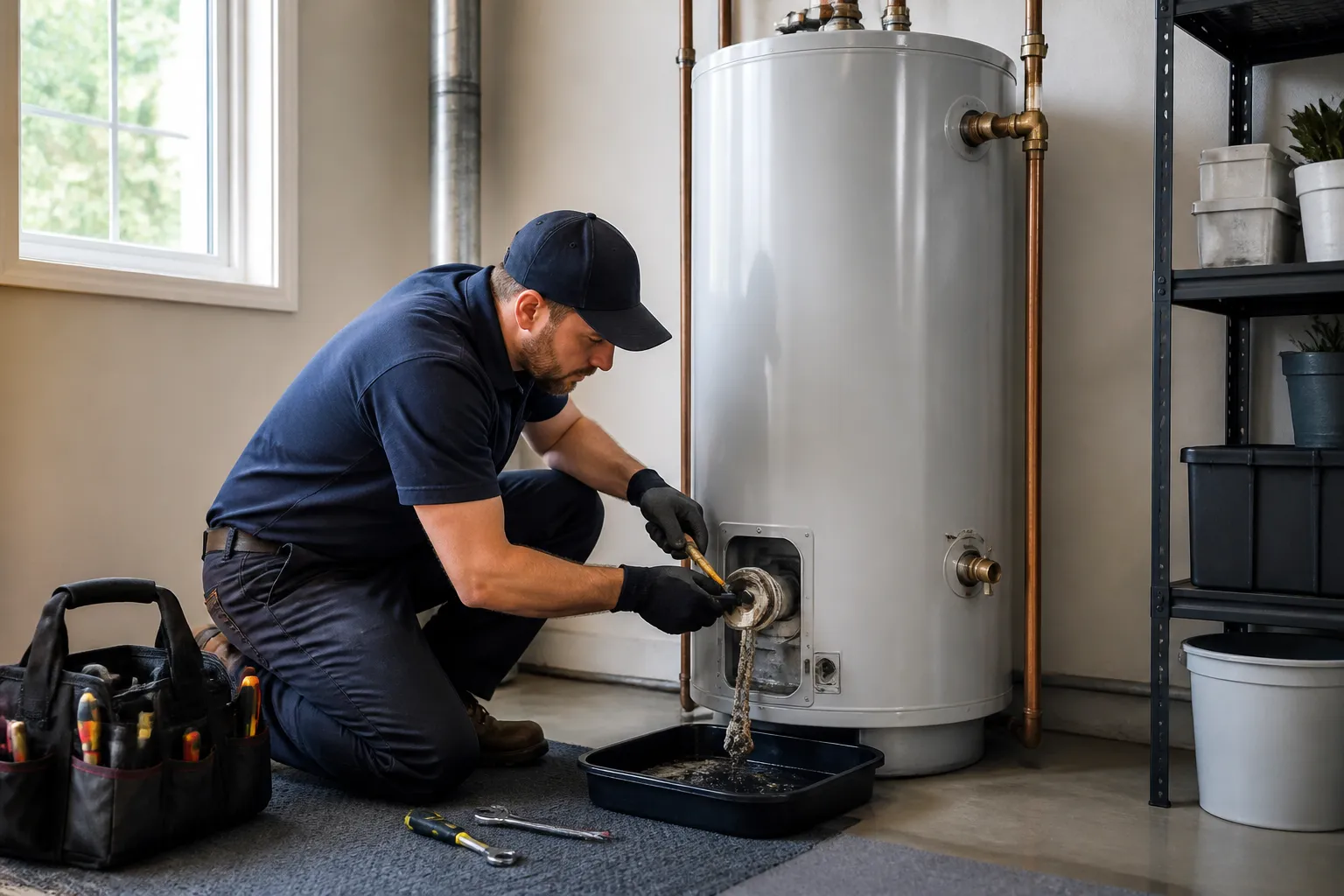
Water heaters collect wear from everyday use, and the care they need depends on their design, water conditions, and service history. A scheduled cleaning visit gives a plumber a chance to review the system and perform suitable care for the specific model. Tank and tankless heaters use different components, so there is no single cleaning procedure that fits every appliance.
Paladin Plumbing provides water heater annual cleaning in Inman and nearby Upstate South Carolina communities. We check the heater type and available model information, discuss any changes in performance, and follow applicable manufacturer guidance. Before work begins, we explain which cleaning or maintenance steps appear appropriate and what falls outside the agreed service.
What annual water heater cleaning can include
Cleaning is a maintenance service, not an assumption that every system needs the same task every year. Depending on the unit and its condition, care may involve addressing sediment in a tank water heater, reviewing accessible connections, or discussing mineral buildup and descaling for a tankless model. The specific procedure depends on the equipment instructions, water quality, access, and service history.
During the visit, the technician can also ask about hot-water changes, unusual sounds, alerts, or visible moisture. These observations help distinguish routine care from a repair concern. If a specific problem is found, we explain it and discuss an appropriate next step rather than treating cleaning as a substitute for repair.
Different care for tank and tankless systems
Tank and tankless water heaters store and heat water differently, so their cleaning needs are not interchangeable. Paladin Plumbing considers the model and conditions at the property before choosing a service approach.
Tank water heater care
A tank model stores heated water, and mineral sediment may settle inside over time. Whether and how the tank should be flushed depends on its condition and manufacturer instructions. The technician can review the unit, discuss any relevant signs of sediment, and explain what care is suitable for that heater.
Tankless water heater care
A tankless model heats water as it passes through the unit. Mineral deposits may collect in serviceable passages depending on the water supply and use. Descaling can be appropriate for some units, but the model’s requirements and the system’s condition should be checked before the procedure is selected.
Model and water conditions matter
Age, maintenance history, water hardness, household demand, and access all influence a practical service plan. If model details are available, they can help the technician follow the correct instructions. When information is missing, we explain what can be assessed during the visit and any resulting limits.
Signs your water heater may need attention
Changes in hot-water performance can be worth mentioning when you schedule maintenance. They do not automatically mean the heater needs cleaning, but they help the plumber decide what to review. Note whether the change affects the whole property or only one fixture.
- Hot water runs out sooner than the household expects
- Temperature varies during normal use
- A tankless unit shows a recurring maintenance alert
- New sounds or visible residue appear near the heater
- Service or cleaning has not been performed according to the unit’s guidance
Similar symptoms may come from a fixture, control, connection, or another plumbing condition. A maintenance assessment helps determine whether cleaning is relevant or whether another diagnosis is needed.
What to expect during a cleaning visit
We begin by reviewing the system type, available model information, and the concerns you have noticed. The technician checks accessible parts of the heater and determines which cleaning or maintenance tasks are appropriate for that appliance. Access and the condition of the system may affect what can be completed during the visit.
If cleaning is suitable, the work follows the applicable procedure for the unit. The heater is then returned to service as conditions allow, and the technician reviews observations with you. If a leak, damaged connection, persistent alert, or other fault is found, we explain that separately so you can consider the right service.
To help prepare, share the heater’s make and model if you know it, any previous service dates, and what has changed in the hot-water supply. Keep the area around the equipment accessible. Do not remove covers or disconnect gas, electrical, or water connections yourself.
Cleaning is not the same as water heater repair
Cleaning addresses suitable maintenance tasks such as sediment or mineral deposits. Repair addresses a specific fault, leak, or failed component. The two services can be discussed during the same visit, but cleaning should not be presented as a fix for a problem it cannot correct.
If the heater is not producing hot water, is leaking, or shows a persistent operating problem, tell us when you call. We can assess the condition and explain whether cleaning, repair, or another option may fit what is found. The technician will identify known limits, including any part of the system that could not be safely or fully assessed.
Planning routine water heater care
A yearly appointment can serve as a reminder to review the heater, but the appropriate cleaning interval depends on the manufacturer’s recommendations, local water conditions, household use, and the equipment’s history. Follow the documentation for the specific model and ask a plumber to clarify instructions that are unclear. A tankless unit may have different service needs from a storage tank.
Keeping a record of maintenance dates, model information, and performance changes can make future visits more useful. If symptoms develop between scheduled appointments, share them rather than waiting for the next routine check. A water-quality review or filtration discussion may also be useful for some properties, depending on the supply and heater requirements.
Water heater annual cleaning in Inman and nearby areas
Paladin Plumbing serves homeowners in Inman and communities across Upstate South Carolina. We provide water heater service for tank and tankless systems, with clear explanations of what the equipment may need and which steps are suitable for its design. Our approach is to review the actual system rather than apply one maintenance checklist to every home.
When you contact us, mention whether your heater is a tank or tankless model, the last time it was serviced if known, and any performance changes. We can discuss the situation and arrange an assessment for your property.
Frequently asked questions
Does every water heater need cleaning once a year?
Not necessarily. Cleaning needs and timing depend on the heater model, manufacturer guidance, water conditions, household use, and service history. A plumber can review the system and explain which schedule is appropriate for that unit.
Is tank water heater cleaning the same as tankless descaling?
No. Tank and tankless heaters have different designs and care procedures. Sediment management may apply to some tank systems, while descaling may be considered for some tankless units. The model instructions help determine what is suitable.
Can annual cleaning fix inconsistent hot water?
It may help if a suitable maintenance issue is contributing, but temperature changes can have other causes. The heater and affected fixtures should be assessed before assuming cleaning will resolve the symptom.
What information should I provide before the visit?
Share the heater type, model information if available, previous service dates, and any change in hot-water performance. Mention visible moisture, alerts, or unusual sounds so the technician can consider them.
Can I clean or flush my water heater myself?
Follow the owner’s instructions and avoid opening covers or disconnecting gas, electrical, or water connections if you are unsure how to handle them. A qualified plumber can review the model and perform suitable service.
What if the technician finds a repair problem during cleaning?
The technician can explain what was observed and distinguish it from routine cleaning. If repair may be needed, the scope and next steps can be discussed separately before additional work proceeds.