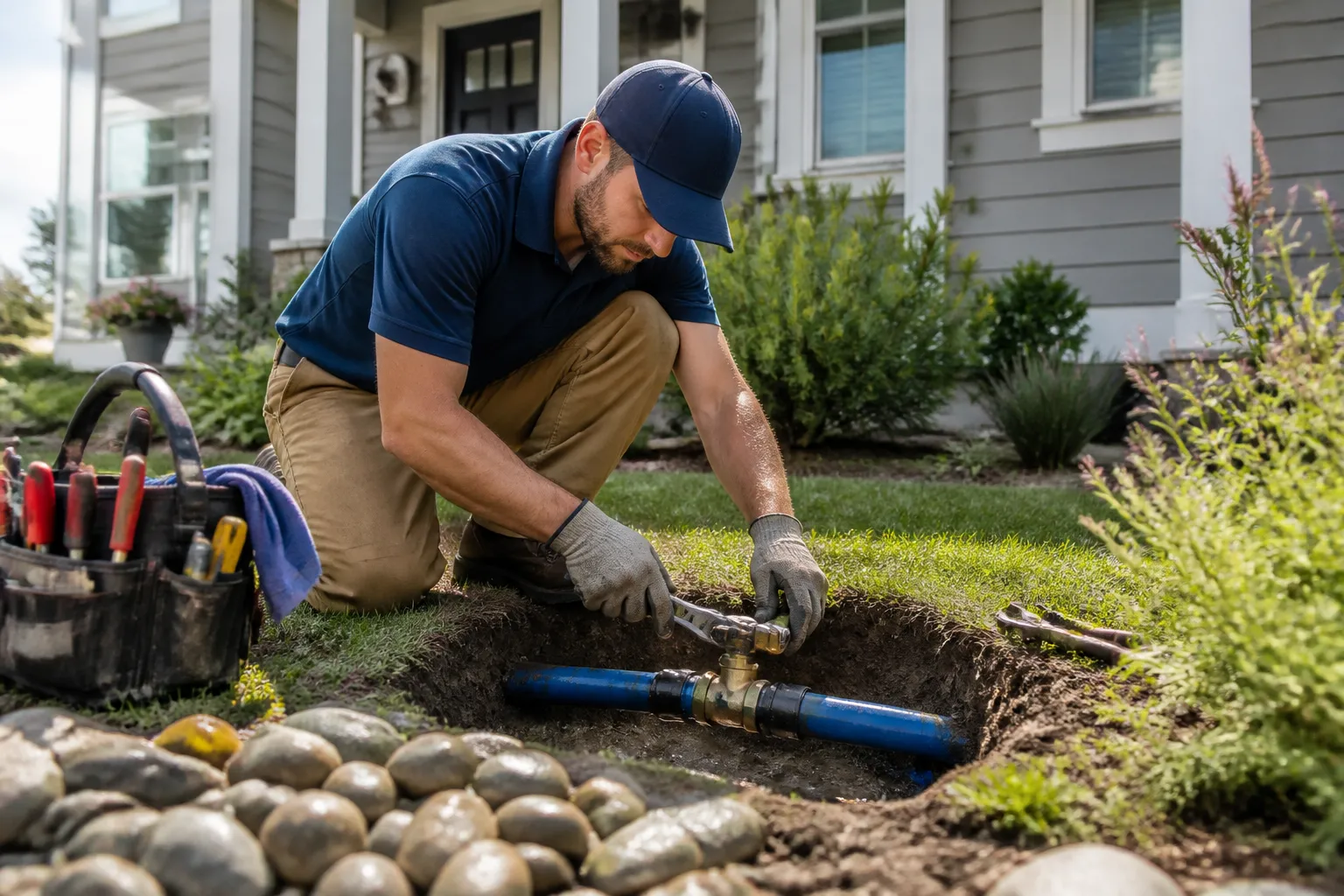
An underground water line can leak beneath a yard, walkway, or driveway without showing the exact source at the surface. Persistent wet ground, an unexpected change in water supply, or a repair that does not resolve the symptoms may indicate a problem with the buried pipe. Locating the affected area helps determine what kind of repair may be appropriate.
Paladin Plumbing provides underground water line repair in Inman and nearby Upstate South Carolina communities. We review the symptoms, consider the suspected route, and assess accessible service connections before discussing repair options. The work area and scope depend on the line’s location, pipe condition, access, and any nearby utilities or structures.
Signs an underground water line may need repair
Some buried-line problems create visible changes, while others first appear as a change in water service. Share what you have noticed, including signs such as:
- Persistent damp soil or a soft area near the suspected route
- Pooling water that is not explained by rain or irrigation
- Unusual pressure changes at multiple fixtures
- A water supply issue that returns after another plumbing repair
- Visible water near an outdoor service connection or entry point
These conditions can have more than one cause. Irrigation, surface drainage, a fixture, or an indoor pipe may create similar symptoms. A plumber considers the location, timing, and water-use pattern before concluding that an underground line is responsible.
What can damage a buried water line
Underground piping can be affected by age, material condition, movement in the soil, pressure changes, or damage from prior work. The actual cause is not always visible from the surface. The route and history of the line can help guide an assessment, but the pipe itself may need to be accessed before its condition is confirmed.
Leak location and surface clues
Wet ground above a line can help narrow the area to inspect, but water may travel through soil before it appears. The visible spot is not always directly over the leak. We consider nearby plumbing, drainage, irrigation, and the suspected route when determining what needs closer attention.
Pipe condition and previous repairs
A repair made in one location may not address deterioration elsewhere on an older line. Previous work, pipe material, and the frequency of recurring symptoms can help show whether a targeted repair is worth considering or whether a longer section should be assessed.
How we assess an underground water line
We start by reviewing the symptoms and any service history. The technician checks accessible connections and the plumbing where the line enters the home, then considers the suspected route and visible surface conditions. If the water provider or another party maintains part of the service connection, that responsibility may need to be clarified as well.
Underground sections cannot always be evaluated fully without access. If additional locating or exposure is needed to identify the leak or confirm the pipe condition, we explain that before expanding the work. Property plans, information about earlier repairs, and notes about when the wet area appears can help focus the assessment.
Repair or replacement for an underground line
A focused repair may be appropriate when the damaged section is identified and the pipe on either side is in condition to connect. If the line has multiple leak points, broader deterioration, or a recurring failure pattern, replacement of a longer section may be considered. The decision depends on the condition that can be confirmed and the access required.
We explain what a proposed repair is intended to address and whether there are limits to what was visible. If symptoms suggest an interior plumbing problem or another source, we discuss that possibility rather than recommending excavation without a clear reason.
Access, excavation, and nearby utilities
Reaching a buried water line may involve opening a small or larger area of the yard, pavement, or another surface. The route, pipe depth, soil, landscaping, and nearby structures all affect access. Other utilities can share the area, so their locations and the work zone need to be considered before excavation. Do not dig to expose a suspected pipe yourself.
After the affected section is accessible, the repair plan depends on the pipe material and the observed damage. The technician explains the intended work area, how the repair will connect to the existing line, and what conditions could change the scope. Surface restoration may be separate from the plumbing repair, depending on the work agreed for the property.
What to expect during a repair visit
Before the visit, note where water appears, how long it has been present, whether pressure changes affect several fixtures, and what prior work has been done. Clear access to the home’s main shutoff and visible service connections if possible. If you have a property plan or information about the water line route, share it with the technician.
During the assessment, we review what can be confirmed and explain the next step. If the line needs to be exposed or a wider area evaluated, we discuss the access plan before proceeding. After the repair, the affected plumbing is checked as conditions allow and the technician reviews what was completed.
Underground water line repair in Inman and nearby areas
Paladin Plumbing serves Inman and surrounding Upstate South Carolina communities. We help homeowners investigate suspected underground water line leaks, understand the access requirements, and consider repair or replacement options based on the condition of the service line.
When you call, describe the wet area, any changes in water supply, and whether the problem has happened before. Mention nearby irrigation or recent yard work if relevant. These details can help us prepare for an assessment of the property.
Underground water line repair FAQ
How can I tell if a buried water line is leaking?
Persistent wet ground, unexplained pooling, or supply changes can be signs, but they can also come from irrigation, drainage, or other plumbing. The suspected route and symptoms need to be assessed together.
Will the leak always appear directly above the pipe?
No. Water can move through soil before reaching the surface, so the wet spot may not line up exactly with the leak. The route and surrounding conditions help guide the assessment.
Does an underground water line repair require excavation?
Access requirements depend on the line’s location and the method suited to the confirmed damage. The work area is discussed after the route and site conditions have been assessed.
Can one damaged section be repaired?
Sometimes. A targeted repair may fit when the affected area is identifiable and the adjoining pipe can support the connection. Broader wear or repeat leaks may lead to a longer replacement discussion.
Should I dig to find the leak before calling?
No. Other utilities may be nearby, and the leak location may not match the wet spot. Share the surface signs and any known line information with a plumbing professional instead.
What information helps with an underground line assessment?
Describe when the moisture appears, which fixtures are affected, any supply changes, previous repairs, and recent yard work. Property plans or service-line records may also help.