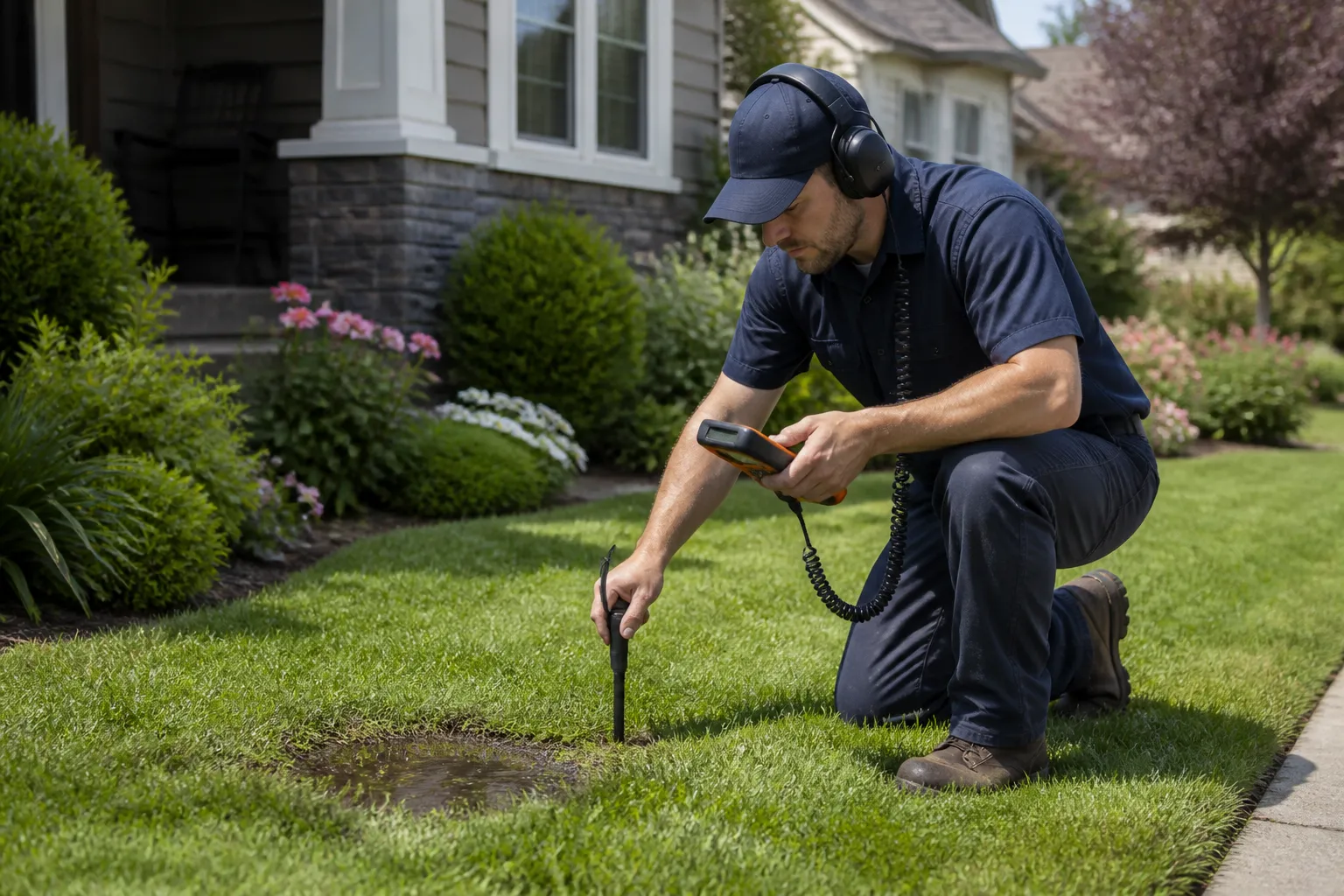
A leak in a buried water line may leave a wet patch in the yard, an unexplained change in water use, or reduced supply at fixtures. The visible symptom can be several feet from the source, and rain, irrigation, drainage, or another plumbing condition may look similar. An assessment helps narrow down what is happening before anyone starts digging.
Paladin Plumbing provides underground leak detection in Inman and nearby Upstate South Carolina communities. We review the symptoms, consider the likely water line route, and check accessible plumbing connections. Detection methods and what can be confirmed depend on the pipe, depth, site access, and conditions at the property.
Underground Leak Detection for Buried Water Lines
Water service lines can run below lawns, walks, driveways, and other areas between a supply point and the home. A leak may allow water to move through soil before appearing at the surface, so a damp spot is not always directly above the affected pipe. The route and the pattern of water use can provide useful context.
Detection is intended to identify or narrow down a suspected plumbing source. We consider accessible parts of the system and information about the property before discussing further evaluation or repair. If the evidence points to an indoor fixture, irrigation, surface drainage, or another cause, we explain that rather than treating every wet area as a buried water line leak.
Signs of a Possible Underground Leak
Buried line concerns can appear gradually or become noticeable after a change in water use. Let us know if you have observed:
- A persistently wet or unusually soft area when there has not been recent rain.
- Pooling or a small stream of water along a suspected service route.
- A water meter that continues to move when household water is off.
- An unexplained change in water use or a bill that does not match typical use.
- Water pressure changes affecting more than one fixture.
- Moisture near the point where a water line enters the home.
- A leak or service concern after digging or other work near buried plumbing.
These signs have other possible causes. Irrigation, surface runoff, a leaking hose connection, a fixture, or a provider-side service component may need to be considered. The location, timing, and connection to water use help guide the assessment.
What Detection Assessment Considers
Before selecting a detection approach, we gather practical details about the property and the suspected line. The following information can help focus the evaluation.
Likely route and access
We consider where the water service enters the home and any known information about its path. Property plans, previous repair records, and visible shutoffs can help identify relevant sections. Underground depth, paving, landscaping, and other site features affect what can be reached and how the area can be checked.
Surface signs and water use
The size and timing of a wet area, changes in water supply, and meter observations can help distinguish a possible plumbing leak from normal watering or surface drainage. No single observation is conclusive, so we consider the pattern rather than relying on one clue.
Nearby work and other utilities
Recent digging, construction, or landscaping may be relevant to a buried line concern. Other utilities can share the same general area, so the work zone should be considered before any ground is disturbed. Do not dig to expose a suspected leak yourself.
How We Approach an Underground Leak Assessment
The inspection is shaped by the line and the information available. A typical visit may include:
- Review what you have noticed. We ask when the wet area or supply change began and whether it changes with household water use.
- Check accessible plumbing. We consider visible connections and the point where the line reaches the building, when available.
- Assess the suspected route. We use methods appropriate to the site conditions to help narrow down the area that may need closer attention.
- Explain findings and next steps. We describe what was identified, what remains uncertain, and whether repair or additional evaluation may be appropriate.
Not every underground pipe can be located or fully assessed during one visit. If surface conditions, access, line material, depth, or another factor limits the evaluation, we explain the limitation and discuss a practical next step before expanding the work.
What Detection Can Confirm and Its Limits
Detection may help narrow down a suspected leak area, but it does not always provide a complete view of a buried pipe. Soil conditions, pipe depth and material, access, and the route itself can affect the result. A visible wet patch can also be displaced from the leak because water may travel through the ground.
We distinguish what the assessment indicates from what has not been confirmed. If a leak is located, we can discuss the plumbing repair separately. If the symptoms do not point clearly to the water line, we may recommend checking another part of the plumbing or contacting the water provider about its equipment or service responsibilities.
Preparing for Underground Leak Detection
Before the appointment, note where the wet area appears, when it is most noticeable, and whether water use or meter movement changes when fixtures are off. Mention recent landscaping or digging and any earlier repairs. If you have a property plan or utility information, keep it available.
Keep people and pets away from unstable or waterlogged ground. Do not dig, drive stakes, or operate equipment over a suspected utility route. If you are unsure who maintains the suspected section, the water provider can clarify its service boundary and any provider-owned equipment.
Underground Leak Detection in Inman and Nearby Communities
Paladin Plumbing serves homeowners in Inman and nearby Upstate South Carolina communities. We assess suspected buried water line leaks, explain what can be determined at the property, and discuss repair options when the findings support a plumbing repair.
When you call (864) 261-1292, describe the surface signs, any change in water use, and the location of the suspected line if known. Information about recent yard work or earlier service can help us prepare for the assessment.
Underground Leak Detection FAQs
How can I tell if a buried water line is leaking?
Persistent wet ground, unexplained water use, or changes in supply can be clues. Rain, irrigation, drainage, and indoor plumbing can create similar signs, so the suspected line should be assessed.
Will the wet spot be directly above the leak?
Not always. Water can move through soil before reaching the surface. The visible area may help focus an assessment, but it may not mark the exact point of the leak.
Can underground leak detection identify the exact pipe location?
Results depend on the line material, depth, route, and site conditions. An assessment may narrow down a suspected area, while some situations require additional evaluation or access.
Should I dig up the wet area before calling?
No. The leak may not be directly below the wet spot, and other utilities could be nearby. Share the location and observations with the plumber instead of excavating yourself.
Does detection include underground water line repair?
Detection and repair are separate steps. After the likely source and work area are understood, the repair options and scope can be discussed.
Who is responsible for the buried water service line?
Responsibility varies by property and provider. Contact the water provider to confirm which part of the service it maintains, especially if the suspected leak is near a meter or connection point.