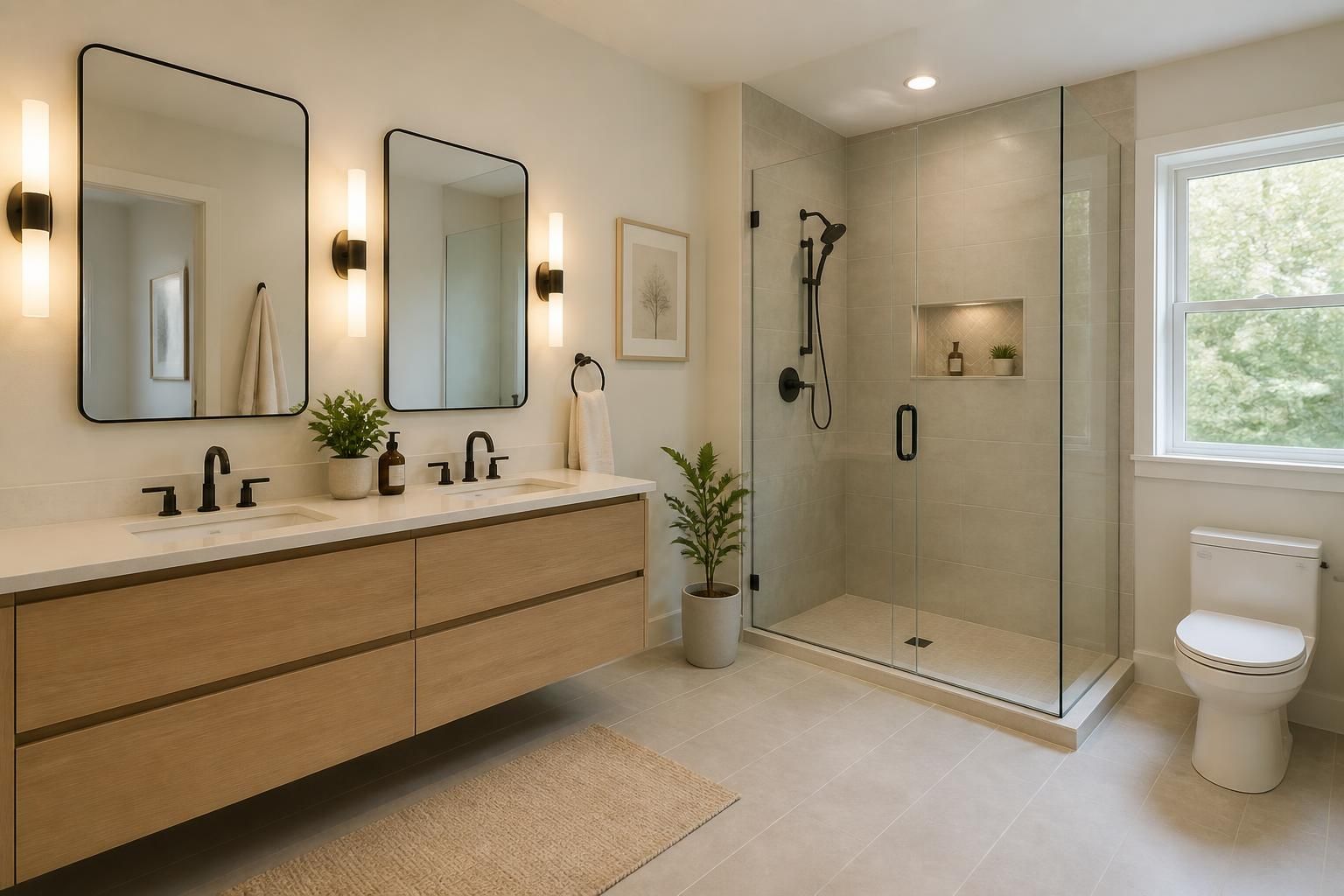
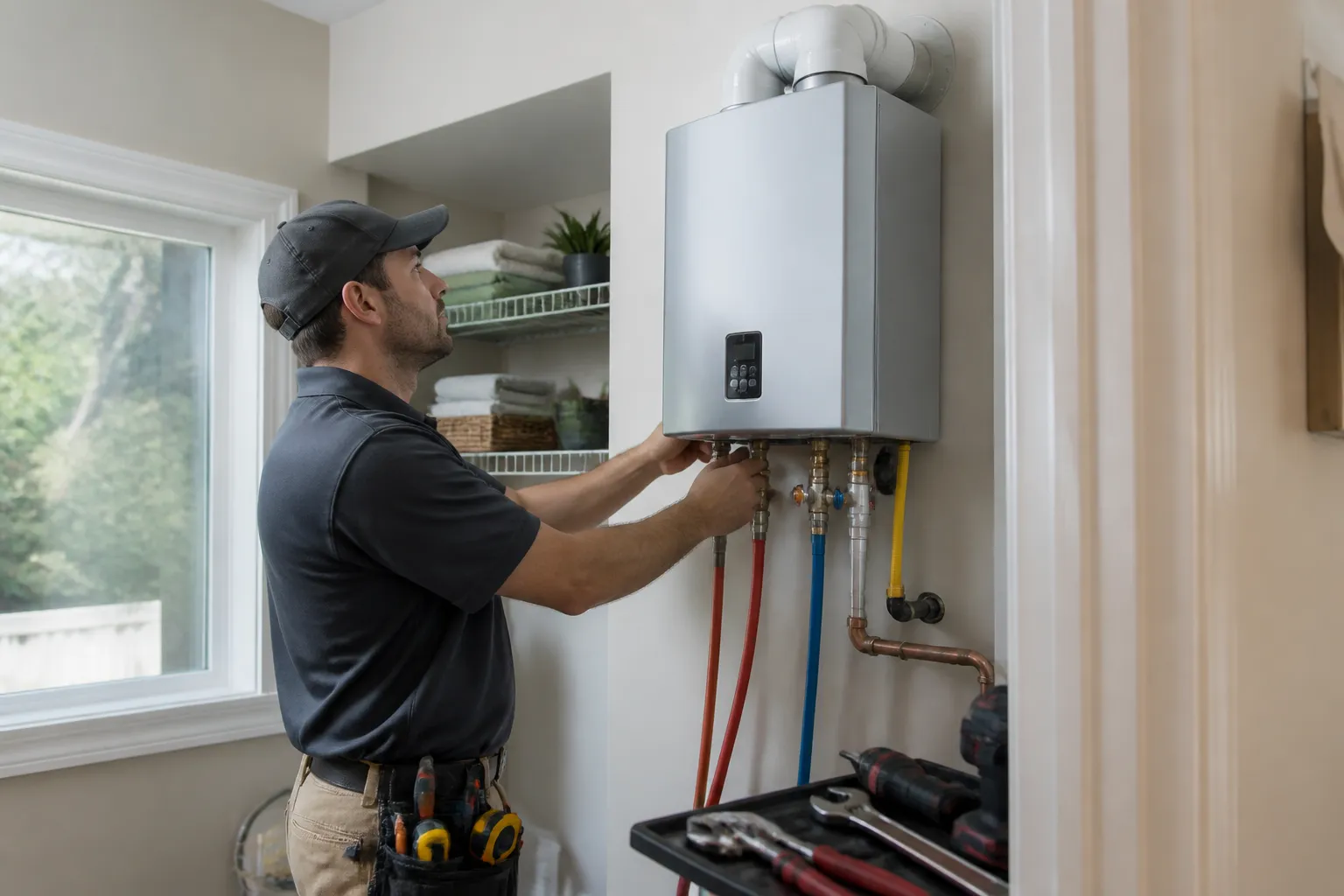
A tankless water heater can be a useful option when a home is being built, remodeled, or updated from a storage tank system. The unit must be matched to the household's hot water demand and the property's fuel, venting, electrical, and plumbing conditions. A review of the installation area helps determine what equipment and connections are suitable.
Paladin Plumbing installs tankless water heaters in Inman and nearby Upstate South Carolina communities. We assess the planned location and existing system, discuss the unit's requirements, and explain the work needed to make the installation fit the property.
Planning a Tankless Installation
Tankless systems heat water as it moves through the unit, so selection depends on expected flow and simultaneous hot water use. The number of bathrooms, fixtures, and household routines can affect the required capacity. We review how the system will be used instead of choosing a model based only on the size of the current tank.
For a new installation, the location should allow access for connections and future service. For a conversion from a tank heater, existing utility lines and venting may need to be reviewed against the selected tankless model.
Installation Requirements We Review
Tankless equipment has product-specific requirements. Fuel supply, electrical connections, venting, water connections, drainage where required, clearances, and access all need to be considered. The exact details vary by unit, so the manufacturer's instructions and the home's conditions guide the installation plan.
- Expected hot water flow and periods of simultaneous use
- Fuel type and capacity of existing utility connections
- Vent route and available space for the equipment
- Electrical supply and any model-specific connection needs
- Water quality, filtration considerations, and access for service
If a conversion requires changes to the existing setup, we explain those requirements before work begins. Some properties may need additional preparation or a different unit selection.
Tankless Compared with a Storage Tank
A tankless system does not store a tank of heated water, while a storage tank holds a ready supply for use. Each design has different space, utility, and demand considerations. Tankless installation is not automatically the right choice for every household; the equipment should fit the expected use and the available connections.
Reviewing household demand
We consider which fixtures may be used at the same time and the hot water flow those uses require. If the unit is undersized for the expected demand, it may not meet the household's expectations.
Checking the installation location
The proposed location must accommodate the unit and its required connections. Access for maintenance matters too, so placement should not block shutoffs or make future service difficult.
What Tankless Installation Can Involve
The scope depends on whether the system is new construction, a replacement, or a conversion. A typical installation process may include:
- Review the property and usage. We discuss hot water patterns, fixture demand, and the intended location.
- Confirm model requirements. We compare the selected unit's fuel, venting, electrical, and plumbing needs with the site.
- Prepare the installation area. We review existing connections and complete the preparation included in the agreed scope.
- Connect and test the unit. We install the heater and check operation as the system is brought into service.
Existing utility capacity, vent routes, or concealed plumbing can affect a conversion. If a site condition changes the plan, we explain what was found and review the next step.
Getting Ready for the Installation
Share any information about the current heater, available fuel and electrical connections, and the household's hot water use. For a remodel or new build, project drawings and installation timing can help with planning. Clear access to the proposed unit location and relevant shutoffs.
After installation, use the system according to its instructions and note any unexpected temperature changes or operating indicators. If you are unsure about a setting or notice a concern, ask a plumber to review the unit rather than adjusting internal components.
Tankless Water Heater Installation in Inman and Upstate South Carolina
Paladin Plumbing serves Inman and nearby communities across Upstate South Carolina, including Campobello, Lyman, Boiling Springs, Greer, Spartanburg, Landrum, Taylors, and surrounding areas. We provide tank and tankless water heater services for homes and businesses and explain the installation requirements in clear terms.
To discuss a tankless installation or tank-to-tankless conversion, call +1-864-261-1292 with the current system details and any project plans you have.
Tankless Water Heater Installation FAQ
Can every home switch to a tankless water heater?
Not necessarily. Household demand, fuel and utility capacity, venting, space, and the selected unit's requirements all affect suitability. A site review helps identify what may be needed.
How is a tankless unit sized?
The selection depends on the expected hot water flow and which fixtures may run at the same time. The model and property conditions should be considered together.
Can an existing tank location be used for a tankless unit?
Possibly, but the existing location and connections must meet the selected model's requirements. Venting, utility supply, drainage, and access can affect placement.
Does installation include changes to gas or electrical connections?
That depends on the current connections and the unit's specifications. Any needed changes should be identified and discussed during planning.
What should I provide before a tankless installation?
Share the current water heater details, project plans, and household hot water concerns. Photos or model information may help the plumber review the setup before the visit.
What maintenance does a new tankless system need?
Care requirements vary by model and water conditions. Follow the manufacturer's schedule and ask a plumber which maintenance or descaling services apply to your unit.