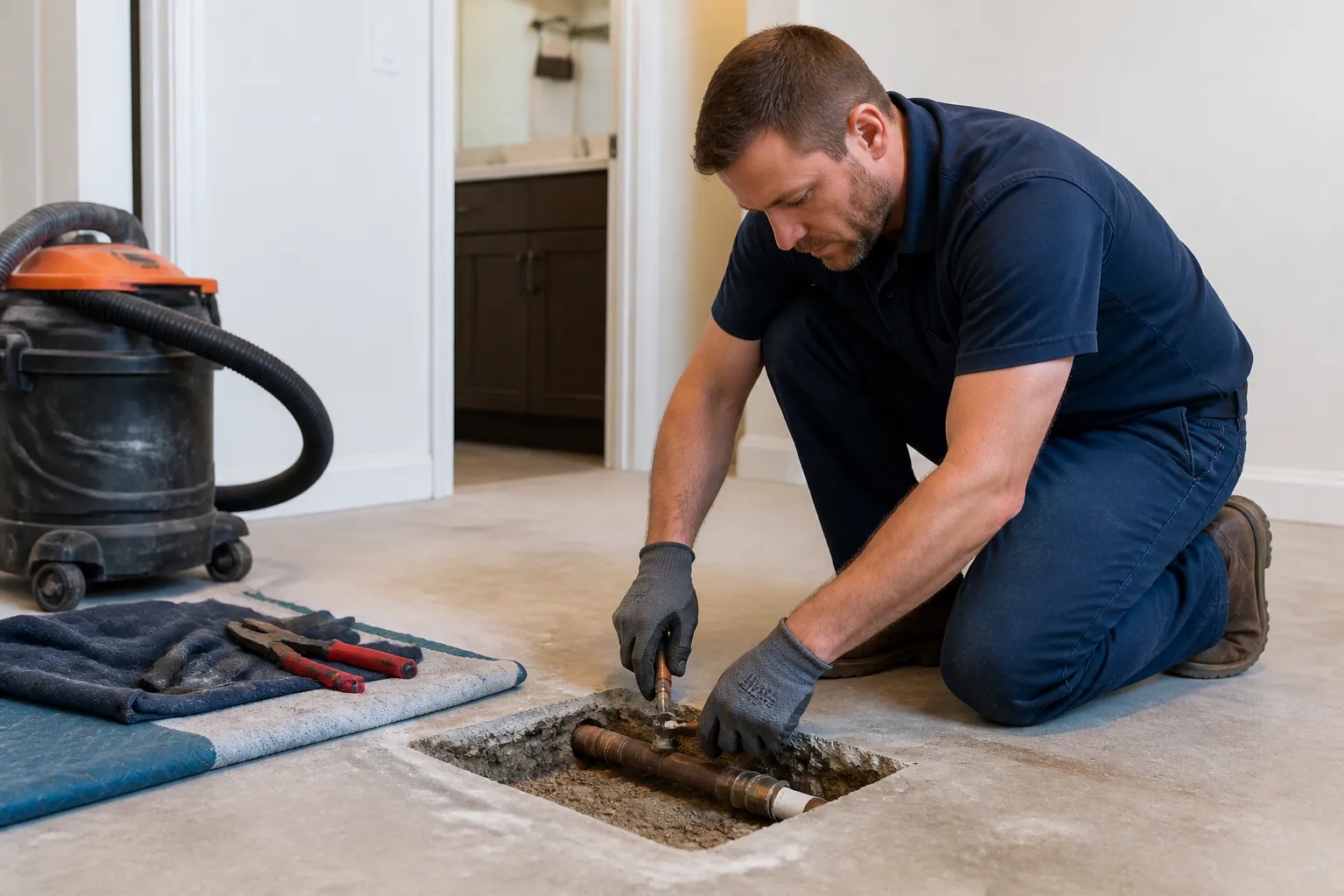
A water line beneath a concrete slab can leak out of sight, with moisture, warm flooring, or changes in water supply appearing somewhere inside the home. Once the likely source is identified, the repair plan depends on the affected pipe, the slab and floor construction, and how the line can be reached.
Paladin Plumbing provides slab leak repair in Inman and nearby Upstate South Carolina communities. We review the available findings, explain the proposed plumbing work and access needs, and discuss the scope before proceeding. If the source has not been confirmed, leak detection may be needed before choosing a repair.
Slab Leak Repair for Hidden Water Lines
Water lines can run beneath a home's slab and serve multiple fixtures. A leak in a concealed line may allow water to travel below the floor before it becomes visible. Repair begins with understanding which pipe is affected and where the problem is likely located. Moisture on a floor alone is not enough to determine that a line under the slab is the source.
We consider the symptoms, any prior detection work, accessible connections, and information about the plumbing layout. This helps distinguish a supply line concern from a fixture leak, a drain issue, or another source of moisture. The repair approach should follow the findings rather than assume the same method suits every home.
When a Slab Leak Repair May Be Needed
A repair assessment may be appropriate when an evaluation points to a water line beneath the concrete. Share changes such as:
- Persistent moisture or staining near the floor with no clear surface source.
- A warm patch on the floor that changes with hot water use.
- Water sounds when fixtures and appliances are turned off.
- Recurring dampness near a suspected pipe route.
- Water supply or pressure changes affecting more than one fixture.
- A prior leak assessment that identified a likely concealed line location.
These signs do not all indicate a slab leak, and they do not identify a repair method. If the source is uncertain, we can discuss detection first. When a different fixture, valve, or accessible pipe is responsible, that should be addressed instead of opening the slab unnecessarily.
How We Identify the Repair Scope
Before work begins, we review what is known about the leak and what still needs confirmation. The repair plan depends on location, pipe condition, access, and the way the affected line connects to the rest of the plumbing.
Confirm the affected line
We consider whether the symptoms and prior assessment point to a water supply pipe beneath the slab or another part of the system. If the line type or location is not sufficiently clear, we explain what further evaluation may help establish the source.
Review access and surrounding conditions
Flooring, slab construction, nearby fixtures, and the pipe route influence how the affected area can be reached. Existing plans or notes about past plumbing work can help with planning, but concealed conditions may only become clear as access is developed.
Explain the work before proceeding
We describe the proposed plumbing repair, the area that may need access, and any known limits. If new information changes the expected work, we explain the finding and discuss the options before adding work beyond the agreed scope.
Repair Approaches Depend on the Property
Some slab leaks may be addressed by accessing the affected section and repairing or replacing it. In other situations, the pipe route, condition, or property layout may make a different plumbing approach worth evaluating. The appropriate option depends on what can be confirmed at the site. We do not assume that every leak can be repaired through the same access point or method.
Opening concrete or flooring may be part of the work when direct access is needed. If another route or repair strategy is considered, we explain how it relates to the affected line and the property. Any flooring, concrete, or finish restoration may be separate from the plumbing repair, so the scope should be clear before work starts.
What to Expect During Slab Leak Repair
Every repair is shaped by the location and the access available. A typical process may include:
- Review the findings. We discuss the suspected or confirmed leak location and the information used to define the work.
- Plan access. We explain the area that may need to be reached and consider nearby plumbing and finishes.
- Repair the affected plumbing. The agreed work addresses the identified pipe or connection using an approach suited to the site.
- Check the plumbing after service. We review the work and discuss what was checked and any remaining observations.
The sequence and amount of access can vary. If conditions differ from what was visible during planning, we explain what has changed and review the next step with you.
Planning for Slab Access and Finished Floors
Accessing a line beneath concrete can affect flooring and nearby surfaces. Before service, move furniture or stored items away from the suspected work area when practical. If you have floor plans, plumbing records, or notes from an earlier assessment, keep them available. These details may help guide the conversation, but they do not replace checking the actual site conditions.
Do not cut, drill, or break through the floor to find the pipe yourself. Other utilities or plumbing may be nearby, and the visible moisture may not be directly above the leak. We discuss access needs and clarify which work is included in the plumbing scope.
After the Plumbing Repair
After the repair, pay attention to whether the original signs change and contact us if moisture or supply symptoms continue. It may take time to determine whether damp materials are drying or whether a separate source remains. Water damage to flooring, cabinets, or other finishes may require a separate assessment by a restoration provider.
Keep a record of the work and any follow-up observations. If you notice a new leak, a change in water pressure, or recurring moisture, share where it appears and when it began. That information can help guide any additional plumbing evaluation.
Slab Leak Repair in Inman and Nearby Communities
Paladin Plumbing serves homeowners in Inman and nearby Upstate South Carolina communities. We assess slab leak findings, explain repair and access options, and plan plumbing work around the conditions at the property.
When you call (864) 261-1292, tell us what signs you have noticed and whether a leak assessment has already been completed. If you have information about the pipe location or previous repairs, share that as well so we can discuss a practical next step.
Slab Leak Repair FAQs
Does every suspected slab leak require breaking the concrete?
Not necessarily. The source and pipe route should be assessed first. Access needs depend on the location, construction, and repair approach that fits the confirmed conditions.
Can a slab leak be repaired before its exact location is known?
A repair plan needs a sufficiently clear understanding of the affected plumbing. If the source or location remains uncertain, detection or additional evaluation may be needed first.
Will the repair include replacing all pipes under the slab?
Not by default. The scope depends on the affected pipe, its condition, and the available repair options. We explain what the assessment supports before proposing work.
Is slab leak detection included with repair?
Detection and repair are separate steps. If the leak has not been located, the findings and access needs should be reviewed before repair work is planned.
Will flooring or concrete restoration be part of the plumbing repair?
Restoration depends on the agreed scope and the surfaces affected. Concrete, flooring, and finish work may require a separate provider, so ask which tasks are included before work begins.
What information helps plan a slab leak repair?
Share the symptoms, any detection findings, known pipe locations, and previous repair records. Notes about which fixtures are affected and when the signs occur can also help focus the assessment.