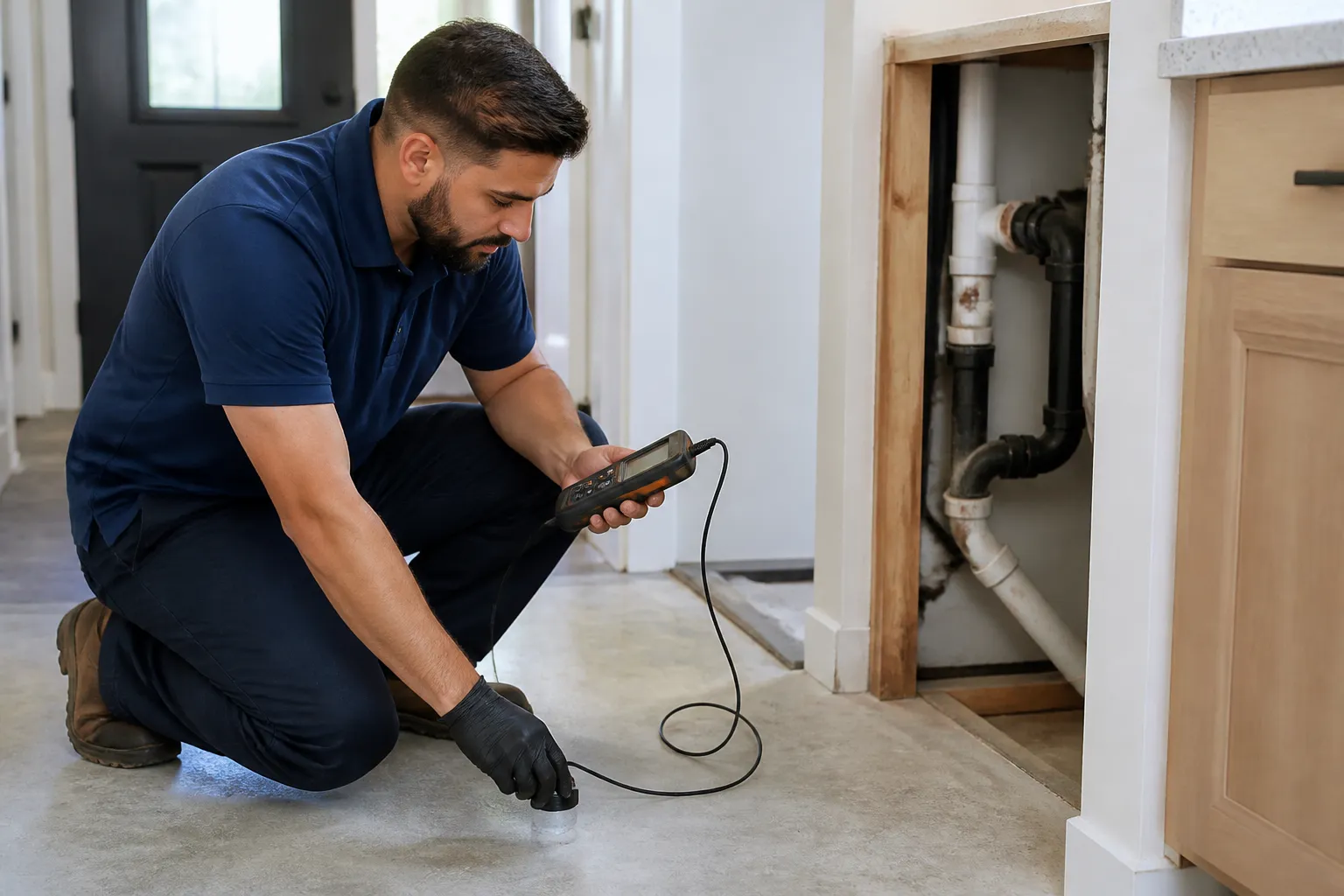
A leak beneath a concrete slab can be hard to trace because the water line is hidden below the floor. You might notice warm or damp flooring, a water sound when fixtures are off, or an unexplained change in water use. These clues can also have other causes, so the source should be assessed before opening the floor or choosing a repair.
Paladin Plumbing provides slab leak detection in Inman and nearby Upstate South Carolina communities. We review the symptoms, check accessible plumbing, and explain what the available assessment can establish. The location and condition of the piping, floor construction, and access all shape the next step.
Slab Leak Detection for Hidden Water Line Concerns
Water lines may run beneath a home's concrete foundation and connect to interior fixtures. If a line develops a leak, water can move under flooring or along building materials before it becomes visible. The first damp area is not always directly above the source, and a warm floor does not by itself confirm that a hot water line is leaking.
Detection focuses on narrowing down whether a plumbing leak is likely and where further evaluation may be needed. We consider the pattern of symptoms and the parts of the system that can be checked without disturbing the floor. If more access is needed to confirm the location, we explain why before discussing that work.
Signs of a Possible Slab Leak
One sign on its own may have more than one explanation. Share any changes you have noticed, including:
- A warm or damp area on a floor without a clear spill or surface source.
- Water sounds when faucets and appliances are not being used.
- An unexplained change in water use or a meter that appears to move when water is off.
- Recurring moisture, staining, or a musty smell near the floor or baseboards.
- A change in water pressure that affects more than one fixture.
- Water appearing near an area where a buried line may pass through the home.
These symptoms do not prove a slab leak. A fixture, appliance, roof or surface water, condensation, or another plumbing section may cause similar signs. The timing, location, and whether the signs change with water use can help focus the assessment.
How We Approach Slab Leak Detection
We start by understanding what has changed and which parts of the home are affected. The assessment method depends on the plumbing layout, available access, and the conditions at the property. We explain what is being checked and what the findings can and cannot show.
Review the symptom pattern
We ask when the moisture or sound began, whether it comes and goes, and whether hot or cold water use seems related. Notes about which rooms or fixtures are nearby can help distinguish a localized fixture problem from a concern in a line serving more of the home.
Check accessible plumbing
Where access allows, we look at visible supply lines, fixtures, shutoffs, and other relevant plumbing connections. This helps identify a source that may be above the slab or in an accessible area, rather than assuming the concrete must be opened.
Narrow down the suspected area
We consider the layout and symptoms together to determine what portion of the plumbing may warrant closer attention. Detection approaches vary with the site. If an area cannot be evaluated sufficiently without additional access or testing, we explain that limitation and discuss the next step.
What an Assessment Can Confirm
A detection visit can help identify a likely plumbing source or narrow down where a leak may be occurring. It does not always provide a complete view of every concealed pipe. Floor construction, line depth, access, and the way water travels beneath a slab can affect how precisely a source can be located.
We separate what is observed from what remains uncertain. If findings point to an accessible fixture or connection, that may call for a different service than a leak beneath concrete. If a slab area remains the likely source, we explain what additional confirmation or access may be needed before a repair plan is set.
From Leak Detection to a Repair Plan
Detection and repair are related but separate steps. Detection seeks to identify or narrow down a suspected leak. Repair addresses the affected pipe or connection once the location and work scope are understood. Depending on the system and site, possible next steps may involve accessing a section of pipe, repairing or replacing the affected portion, or evaluating another suitable approach.
Concrete access, flooring, and any related restoration can affect the overall project. We explain the plumbing work being considered and identify when another trade or separate restoration work may be needed. If the assessment does not support a slab leak, we can discuss other plumbing areas or causes to evaluate instead.
Preparing for a Slab Leak Assessment
Before the visit, note when the signs occur, which rooms or fixtures are nearby, and whether the floor feels warm or damp. If you have noticed a water meter change or already arranged another plumbing check, share that information. Keep the affected area accessible where practical.
Do not cut, drill, or break the floor to search for a pipe. If water is near electrical equipment or the area is unsafe to access, keep clear and let us know when arranging service. Avoid changing several valves or settings before the assessment, since the original symptom pattern may help narrow down the source.
Slab Leak Detection in Inman and Nearby Communities
Paladin Plumbing serves homeowners in Inman and nearby Upstate South Carolina communities. We assess signs of hidden plumbing leaks and explain what the available information indicates before discussing access or repair options.
When you call (864) 261-1292, describe where you noticed moisture, sound, warmth, or a change in water use. Mention whether one fixture or several areas are affected. These details can help us prepare for an assessment at your property.
Slab Leak Detection FAQs
How can I tell if a leak is under my concrete slab?
Warm or damp flooring, unexplained water use, or sounds when fixtures are off can be clues, but none confirms a slab leak by itself. A plumbing assessment can help narrow down the source.
Will a slab leak always make the floor wet?
No. A hidden leak may first appear as a sound, a change in water use, or another symptom. Water can travel below the floor before becoming visible, and other conditions can also cause moisture.
Can you locate the exact leak without opening the floor?
That depends on the pipe layout, depth, construction, and available access. An assessment may narrow down the suspected area, but some situations need additional access or evaluation to confirm the location.
Does a warm spot on the floor mean a hot water pipe is leaking?
Not necessarily. A warm area can have other explanations. Share where it occurs and whether it changes with hot water use so the plumber can consider it with the other symptoms.
Is leak detection the same as slab leak repair?
No. Detection helps identify or narrow down a suspected source. Repair is planned after the affected pipe or connection and the work area are better understood.
What should I do before the plumber arrives?
Write down when the symptom occurs, which rooms or fixtures are affected, and any water-use or meter changes. Keep clear of unsafe or wet electrical areas, and do not break through the slab to search for the pipe.