A hidden plumbing leak may show up as a damp cabinet, a stain on a ceiling, or a water bill that changes without an obvious reason. Sometimes the source is easy to see. Other times, water travels along a pipe or building surface before appearing, making the visible spot different from the point of the leak.
Paladin Plumbing provides plumbing leak detection in Inman and nearby Upstate South Carolina communities. We review the symptoms, check accessible plumbing, and explain what can be confirmed before recommending repair work. The approach depends on where the leak may be, how the plumbing is arranged, and what access is available.
Signs of a plumbing leak
Small leaks can be easy to overlook, especially when piping is concealed. Share any changes you have noticed, including:
- Water stains, bubbling paint, or damp drywall near plumbing
- Moisture under a sink, around a toilet, or near an appliance connection
- Persistent dampness or an unexplained musty odor
- A water meter or bill change that does not match normal use
- Water sounds when fixtures are not being used
These signs can have other causes, such as condensation, roof drainage, or a fixture problem. A careful assessment helps distinguish a plumbing leak from moisture that is coming from somewhere else.
Where a leak may be hiding
Water can escape from supply pipes, valves, fixture connections, or appliance lines. Leaks may occur in areas that are visible, such as under a sink, or in concealed sections behind a wall or below a floor. The location and layout of the plumbing affect what can be checked during the first visit.
Leaks near fixtures and appliances
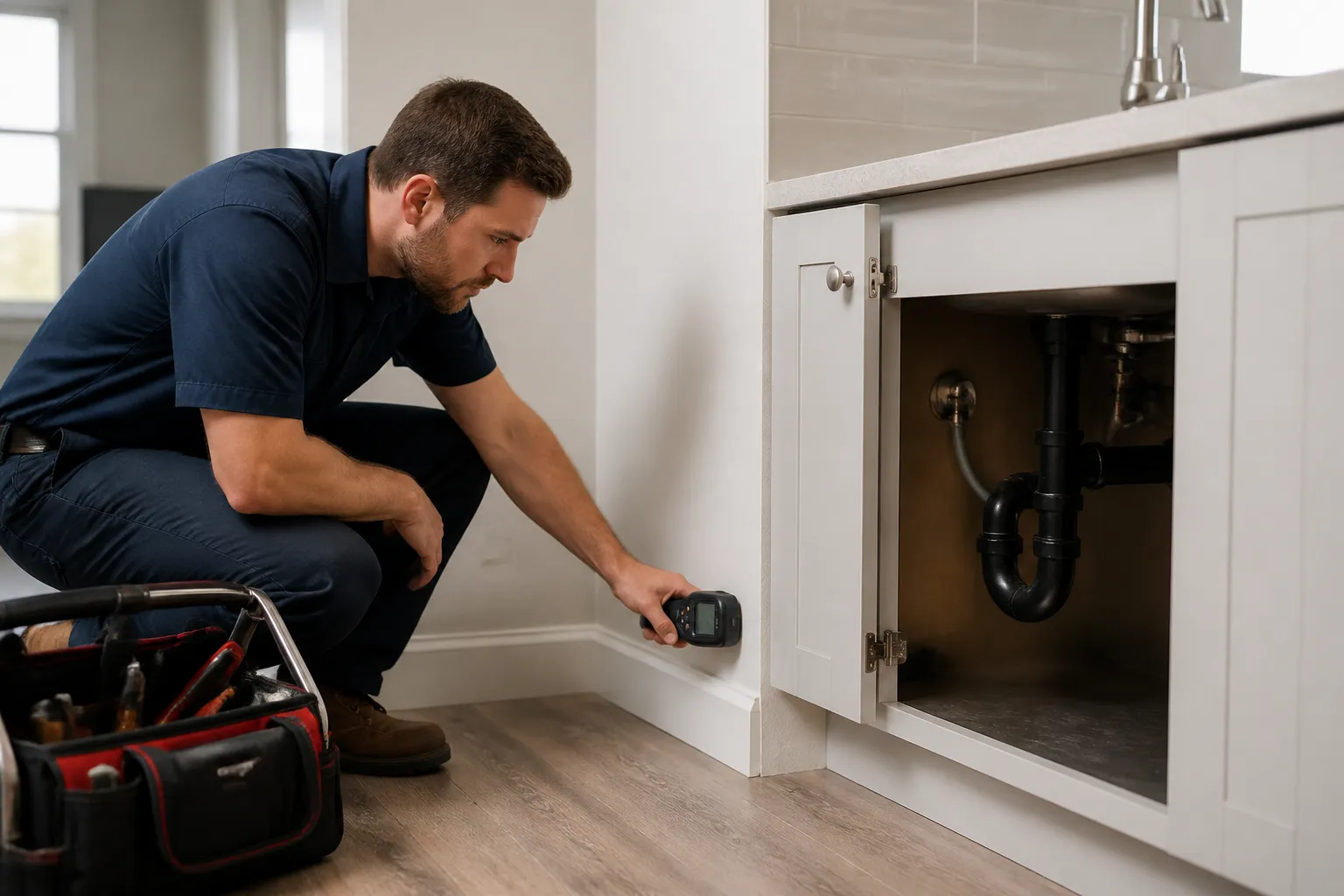
Cabinet floors, shutoff connections, supply hoses, and nearby flooring can provide clues when a leak is close to a fixture. The visible moisture may come from a loose or damaged connection, a drain concern, or another source. We inspect the accessible plumbing before choosing a repair.
Leaks behind walls or below floors
A stain or damp area may appear some distance from a concealed pipe. Water can travel before it becomes visible, so the location of the damage does not always identify the source. We use the symptoms and accessible plumbing to narrow the area and explain if additional access or evaluation is needed.
How we approach leak detection
We begin by asking when the moisture appeared, whether it changes with water use, and which fixtures or rooms are nearby. The technician reviews visible plumbing, looks at the surrounding conditions, and considers the system layout. This helps separate a supply-side leak from a drain, appliance, or non-plumbing moisture concern.
Detection methods vary with the suspected location and access. If a leak is not visible, further checks may be needed to narrow down the source. We explain what the assessment can establish and where uncertainty remains before recommending invasive access or a repair.
What to expect during a detection visit
A leak detection visit focuses on identifying the likely source and defining the next step. We review the concern with you, check accessible piping and connections, and consider how the symptoms respond to normal water use when that information is available. The technician will explain any limits caused by concealed plumbing or restricted access.
If the source is located and repair is appropriate, we describe the repair scope separately. If more evaluation is needed, we explain what access or information may help. Finding moisture is not the same as confirming a plumbing leak, so the assessment should distinguish what is observed from what still needs to be verified.
Leak detection and leak repair are different services
Leak detection is the assessment used to locate or narrow down a suspected leak. Repair addresses the damaged pipe, valve, fitting, or connection after the source is identified. In some situations, both may be handled during the same service, but the repair scope depends on what is found and how the area can be accessed.
If water has affected flooring, cabinets, drywall, or other finishes, restoration may require a separate provider. The plumbing assessment focuses on the water source and the pipe or connection involved. We explain which work Paladin Plumbing can address and which related work is outside the planned plumbing service.
Preparing for leak detection
Before the visit, note when the moisture appears, whether it changes after using a fixture, and which rooms or plumbing connections are close by. If you have seen the issue more than once, sharing the timing can help focus the assessment. Keep access clear around visible pipes, the water heater, or the affected cabinet when possible.
If you know where the home’s main water shutoff is, that information can be useful. Do not open walls, move heavy equipment, or disturb electrical components around a wet area to look for a leak. Let the technician know about prior repairs or any changes made to nearby plumbing.
Plumbing leak detection in Inman and nearby areas
Paladin Plumbing serves Inman and surrounding Upstate South Carolina communities. We help homeowners investigate water stains, damp areas, unexplained moisture, and other signs that may point to a plumbing leak. Our assessment focuses on the likely source and a practical next step based on the conditions at the property.
When you call, describe where the water appears, when it started, and whether it changes with water use. If a fixture, appliance, or section of piping is nearby, mention that too. These details can help us prepare for the visit.
Leak detection FAQ
Can water appear far from the actual leak?
Yes. Water can travel along a pipe, framing, or another surface before becoming visible. The visible stain or damp area may not be directly beside the source, so the surrounding plumbing should be assessed.
Does a high water bill always mean there is a leak?
No. A change in use, a running fixture, or a meter or billing issue can also affect the bill. If the change is unexplained, checking for a plumbing leak may help clarify the cause.
Can you detect a leak behind a wall?
A plumber can review the symptoms and accessible plumbing to narrow down a suspected concealed leak. The exact approach depends on the wall, pipe layout, and available access. Some cases need further evaluation.
Will leak detection include the repair?
Detection identifies or narrows down the likely source. Repair is a separate scope based on the pipe or connection condition and how it can be reached. The options can be discussed after the assessment.
What should I do before the plumber arrives?
Note the location and timing of the moisture, keep access clear around nearby plumbing, and share any previous repair information. Avoid disturbing wet electrical areas or opening walls to search for the pipe.
Can a leak come from an appliance or fixture connection?
Yes. Supply hoses, valves, and connections to fixtures or appliances can leak. The technician checks accessible areas and considers the symptoms before determining whether a separate pipe section is involved.