A sulfur or rotten-egg odor, a hissing sound near gas piping, or concern after work around a line should be taken seriously. If you suspect gas is actively escaping, leave the building immediately and move well away. Do not operate switches, appliances, or vehicles, and do not use a phone inside. From a safe location, call 911 and your gas provider. Do not re-enter until responders say it is safe.
For a concern that is not an active leak situation, Paladin Plumbing provides gas leak detection assessment in Inman and nearby Upstate South Carolina communities. We review what you noticed, assess accessible piping and connections, and explain what can be determined and what next step may be appropriate. A routine plumbing visit is not a substitute for calling 911 and the gas provider when gas may be escaping.
First Steps When Gas May Be Escaping
Protecting people comes before locating a suspected leak. If you smell gas or hear a possible leak inside a building, leave without operating electrical switches, appliances, garage doors, or phones. Do not try to find the source, tighten a fitting, or shut off a valve. Once you are at a safe distance, call 911 and the gas utility or supplier and follow their directions.
If the gas provider or responders have already assessed the property and you need help with a separate plumbing concern, share what they observed and what areas were cleared for inspection. Do not return to a building or equipment area until the appropriate responders say it is safe.
Signs That May Point to a Gas Piping Concern
Gas piping concerns can present in different ways, and a sign alone does not confirm the source. Treat possible active leaks as described above. For a non-active concern, details about where and when it occurs can help focus an assessment.
- A recurring sulfur or rotten-egg odor near an appliance or pipe.
- A hissing sound near a visible connection or gas appliance.
- Visible damage, corrosion, or a shifted connection on accessible piping.
- A concern after remodeling, digging, appliance replacement, or other work nearby.
- An appliance connection that appears loose or damaged, without a current odor or active leak concern.
These observations can have different causes. If an odor or sound indicates that gas may be escaping now, leave and contact 911 and the provider from a safe place rather than arranging a routine appointment.
What a Gas Leak Detection Assessment Can Involve
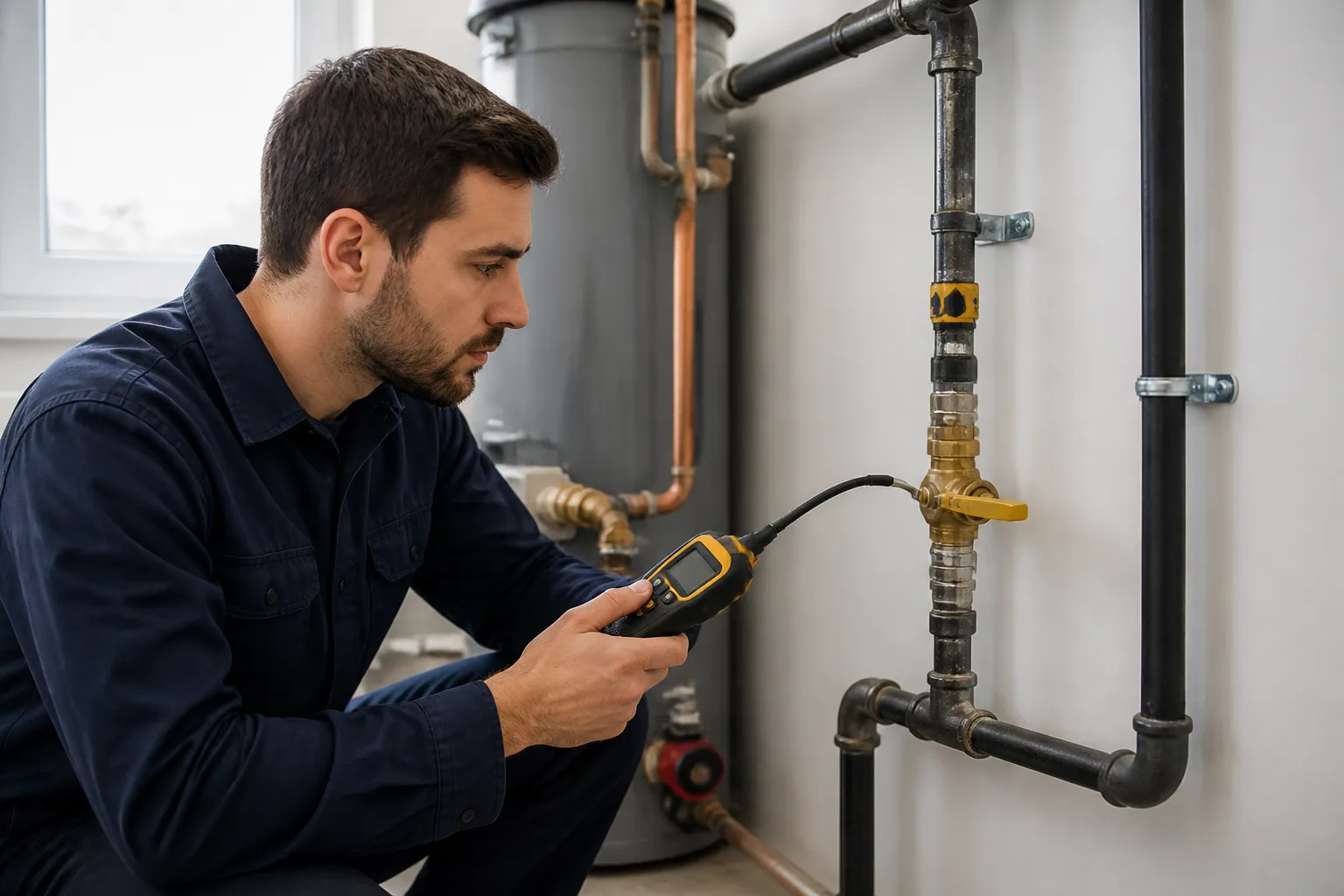
When the area is safe to assess, the service begins with the reported location, the piping layout, and any appliance or project involved. The technician considers accessible gas piping and connections and may use suitable detection or testing methods based on the conditions. The exact approach depends on access, the equipment, and what is safe to examine.
Review the location and history
We ask where a concern was noticed, whether it has happened more than once, which appliance is nearby, and whether recent work may be relevant. If a utility or responder has already visited, share the information they provided. This helps distinguish an unresolved piping question from a concern that requires the provider to return.
Assess accessible piping
Where safe and accessible, we review the relevant piping, connections, and nearby appliance supply. Concealed lines, restricted spaces, and utility-owned equipment may limit what can be checked during a plumbing visit. If a component belongs to the gas provider or another qualified party, we explain that and direct you to the appropriate provider.
Explain findings and next steps
We describe what was checked, what the assessment supports, and where uncertainty remains. If a repair or replacement may be appropriate, we explain the proposed scope and estimate before work proceeds. If the source is not in accessible plumbing or requires a different provider, we clarify that rather than guess.
What Detection Can and Cannot Confirm
A detection assessment is intended to help identify or narrow down a concern in accessible customer-side piping. It cannot guarantee that every concealed section, appliance, or utility component has been evaluated. The view and methods depend on the piping route, access, and conditions at the site.
A smell or sound may also originate from an appliance or equipment outside the plumbing scope. In those cases, an appliance provider or the gas utility may need to assess the equipment. We explain what is within the accessible plumbing area and what needs to be checked by another provider.
If a leak is confirmed, detection and repair are separate parts of the work. We discuss a repair option only after the affected section and scope are understood. Do not attempt to repair a gas pipe yourself or resume using equipment until the appropriate provider says it is safe.
Preparing for a Non-Active Concern
If there is no active odor or suspected leak and it is safe to arrange a plumbing visit, note where the concern occurred, which appliance is nearby, and whether any construction or equipment work preceded it. Keep the area accessible without touching or adjusting gas piping.
If there is any doubt about whether gas is still escaping, leave and call 911 and your gas provider from a safe location. Do not stay inside to take photos, look for a meter reading, or use a phone. A safety concern should be handled by the provider and responders before routine plumbing assessment.
Gas Leak Detection in Inman and Nearby Communities
Paladin Plumbing serves homes and businesses in Inman and nearby Upstate South Carolina communities. For non-active gas piping concerns, we provide a clear assessment of accessible conditions and explain whether plumbing repair, provider coordination, or another service may be the right next step.
When you call (864) 261-1292, describe what was noticed and whether the gas provider or responders have already visited. If you suspect an active leak, do not call from inside or wait for an appointment. Leave the building and contact 911 and the gas provider from a safe location.
Gas Leak Detection FAQs
What should I do if I smell gas in my home?
Leave the building immediately. Do not operate switches or appliances or use a phone inside. Call 911 and your gas provider from a safe location, follow their instructions, and do not re-enter until responders say it is safe.
Can I call a plumber from inside to ask whether the smell is serious?
No. If gas may be escaping, leave first and make calls from a safe location. Contact 911 and the gas provider. Do not use a phone or operate electrical equipment inside the affected area.
Does a rotten-egg odor always mean a gas leak?
It may have another source, but a possible gas odor should be treated seriously. Leave the area and contact 911 and your gas provider from a safe location so they can advise on the next step.
Can Paladin Plumbing check a line after the gas provider has visited?
For a separate plumbing assessment, we can discuss accessible customer-side piping after the provider or responders say the area is safe. The scope depends on what was observed and which components belong to the property.
Can you detect a leak inside a wall?
Concealed piping may be difficult to assess without access, and the approach depends on the line route and safe working conditions. We explain what can be checked and whether more access or a different provider is needed.
What information helps with a non-active gas piping assessment?
Share where and when the concern was noticed, which appliance is nearby, any recent work, and whether the gas provider has already assessed the area. Do not enter an unsafe area to gather information.