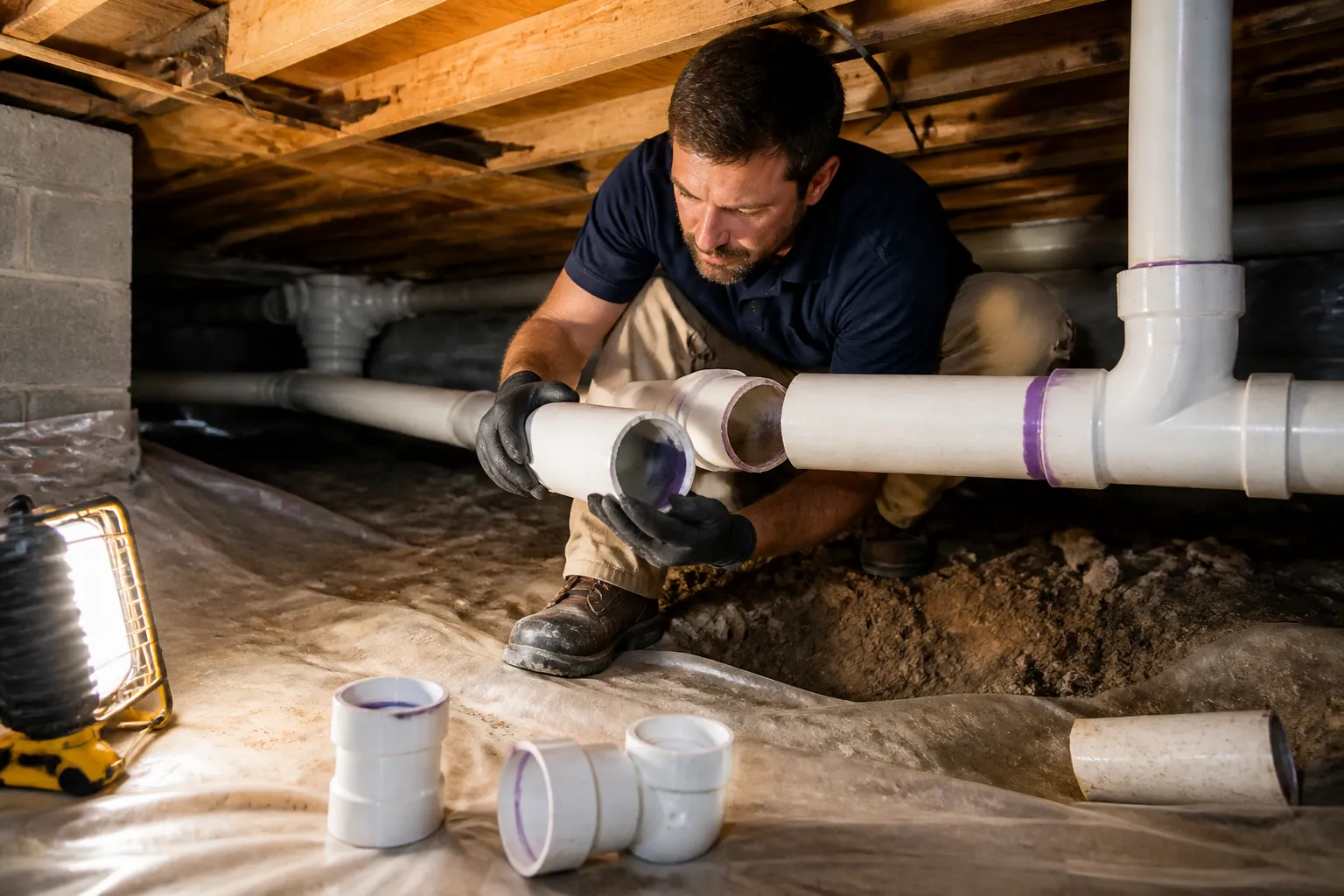
When sinks start draining slowly, tubs hold standing water, or a toilet gurgles after a flush, the problem may be deeper than a simple clog. Buildup inside the drain line can narrow the pipe and make every fixture on that branch act up, especially when grease, soap, hair, and debris collect over time.
Paladin Plumbing helps homeowners and businesses in Inman, South Carolina clear out drain lines so the system can move wastewater the way it should. We look for the cause of the blockage, remove the buildup, and leave you with clear answers about what needs attention next.
Drain warning signs
A drain line rarely fails without sending a few signals first. Catching those signs early can prevent a nuisance clog from turning into a much larger backup inside the line.
- Slow drainage from sinks, tubs, showers, or floor drains
- Recurring clogs that return after plunging or over-the-counter products
- Gurgling sounds after water drains from another fixture
- Bad odors near sinks, tubs, or laundry areas
- Water backing up when more than one fixture is used
- Standing water in a tub or shower after normal use
If several fixtures are acting up at once, the trouble may not be the fixture itself. That often points to a larger restriction inside the drain line, where buildup can collect and slow the entire branch.
What clogs lines
Drain lines collect more than people realize. A line can start out fine and then gradually develop a restriction as everyday waste sticks to the pipe walls and narrows the opening.
Household buildup
Kitchen grease, food residue, soap scum, hair, toothpaste, and paper products can all cling to the inside of a drain line. Once a thin layer forms, more material catches on it and the clog grows.
Fixture use patterns
Some lines see heavier use than others. Laundry drains, bathroom branches, and kitchen lines often carry repeated loads that leave behind debris. The more a line is used, the more important it is to clear the restriction before it gets worse.
Pipe condition
Older or damaged piping can give buildup more places to collect. A rough interior, a low spot in the line, or a section with shifting alignment can trap waste and slow drainage again after a quick fix.
Our cleaning process
Paladin Plumbing starts with a close look at the symptoms you are seeing and the fixtures that are affected. That helps us trace the problem to the drain line, not just the drain opening you can see.
- Listen and inspect. We ask which fixtures are slow, when the problem started, and whether the issue is isolated or spread across the property.
- Locate the restriction. We identify the line section that is causing the slowdown so the service targets the right place.
- Remove buildup. We clear the drain line using methods suited to the blockage and the pipe conditions.
- Check drainage again. After cleaning, we verify that water moves through the line more easily and that the backup points are addressed.
- Share next steps. If we see a condition that could lead to another clog, we explain it plainly so you can decide what to do next.
That approach keeps the work practical and direct. You get a clear diagnosis, a cleared line, and a straightforward explanation of what was found.
Where cleaning helps
Drain line cleaning is useful anywhere wastewater needs a clear path out of the property. We handle residential and commercial drain line concerns throughout Inman, South Carolina, as well as nearby areas across Upstate South Carolina.
- Bathroom sink and shower branches
- Kitchen drain lines
- Laundry drain branches
- Floor drain lines
- Main drain sections with repeat slowdowns
- Commercial sink and fixture drains
For businesses, offices, and industrial facilities, a slow or clogged drain can interrupt daily operations fast. A restricted line may show up as a sink that will not empty, a floor drain that backs up, or a foul odor that keeps returning after the area is cleaned.
Repair or cleaning?
Not every slow drain needs the same solution. Sometimes a line is only packed with buildup and needs cleaning. Other times, the drain line has a deeper concern that should be addressed after the blockage is cleared.
Cleaning makes sense when
The drain is slow, but the problem is tied to buildup, debris, or residue inside the line. You may notice repeated clogs in the same branch, but no visible leak or major pipe failure.
Repair may be needed when
There is a broken section, a drain line leak, or damage that keeps the line from draining normally after cleaning. In those cases, clearing the line helps reveal the underlying issue so it can be handled honestly.
We focus on giving you the clearest path forward. If drain line cleaning solves the problem, we say so. If the line needs more attention, we explain why.
How to avoid repeat clogs
Drain lines usually clog again when the same habits keep feeding the same line. A few simple changes can reduce buildup and help your drains stay easier to use.
- Keep grease and cooking oils out of kitchen drains
- Catch hair and soap residue before they enter shower and tub drains
- Do not flush wipes or bulky paper products unless they are made for that use
- Rinse sinks and tubs with plenty of water after heavy use
- Pay attention to early slowdowns instead of waiting for a full blockage
Those habits do not replace professional cleaning, but they can help stretch the time between service calls and reduce strain on the drain line.
Local service area
Paladin Plumbing is based in Inman, South Carolina and serves customers across the surrounding communities. If you are dealing with a slow or clogged drain line in Campobello, Lyman, Boiling Springs, Greer, Spartanburg, Landrum, Taylors, Chesnee, Reidville, Woodruff, Gaffney, or Greenville, we can help with the same practical approach we bring to local service calls.
Whether the problem is at a home, office, storefront, or industrial facility, the goal stays the same: find the restriction, clear it out, and explain what your drain line needs next.
Common questions
What makes a drain line clog again after it was cleared?
Repeat clogs usually mean buildup was removed from the opening but not from deeper inside the line, or that the same debris keeps entering the drain. Grease, soap, hair, and paper products are common repeat offenders.
Can one slow sink point to a larger line problem?
Yes. A single slow sink can be a sign of buildup at the branch line or a restriction farther down the drain path. If more than one fixture slows at once, the line itself is even more likely to be involved.
Why do drains gurgle after water goes down?
Gurgling often means air is being pushed through a restricted line. That can happen when buildup narrows the pipe and water has to force its way past the blockage.
Is drain line cleaning useful for businesses?
Yes. Commercial drains can collect soap, food waste, paper products, and other debris just like residential lines, sometimes with heavier daily use. Clearing the line helps reduce interruptions for staff and customers.
What should I mention when I call about a clogged line?
Tell us which fixtures are affected, how long the slowdown has been happening, and whether water is backing up anywhere else. Those details help us narrow down the likely location of the restriction.
How soon should I act after noticing slow drainage?
It is smart to act as soon as the slowdown becomes noticeable. A line that is already narrowing can worsen quickly, and early cleaning is often easier than waiting until water stops moving through the fixture.
Schedule service
If your drain line is slowing down, backing up, or making strange sounds, Paladin Plumbing can take a close look and clear the blockage with a straightforward, no-nonsense approach. Call
+18642611292 or email
eric@leadzmanager.com to set up drain line cleaning in Inman, South Carolina.